News - Emerging markets
Categories: Emerging Markets
Topics: Emerging markets | First state investments | Quantitative-easing
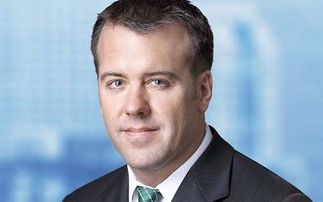
First State’s Jonathan Asante has warned emerging markets are heading for a bubble because policymakers have resumed quantitative easing.
The head of global emerging market equities said he is taking steps to preserve capital ahead of the inevitable crash.
“Monetary policy is not being set for the markets we invest in. It is being set for low growers, not fast growers, which is a huge problem,” he said.
“Many places like ours could get massively out of control and many of them already are.”
Angus Tulloch, joint managing partner of the Asia Pacific & global emerging markets equity team, is also concerned about rising asset prices.
“Policymakers are recreating the conditions of 1999 and 2007 which both ended in disaster for equity investors,” he said.
“The conditions for a bubble are in place with the money printed in the West likely to end up in Asia Pacific markets as investors chase the perceived higher returns on offer.”
Asante, who co-manages the £1.3bn Global Emerging Markets Leaders and £675m Global Emerging Markets funds, highlights India as one country where rising inflows are already causing problems.
“India is the worst offender. It is suffering from inflation of goods and services, and inflation of asset prices,” he said.
“The problem is people are looking at the P/E of the GEM index and saying it is not a bubble.
“Many of the biggest names on the index are questionable companies. When you strip those out and look at the P/E of the best companies, they are all massively expensive.”
Asante, who also runs the £67m Latin America fund, is adding exposure to telecoms and utility companies at the expense of consumer names.
“Telecoms and utilities are out of favour because investors do not believe they will ever grow again. However, these stocks are offering good yields,” he said.
“One name I have recently added to the fund is Poland’s TPSA. It has basically been a tale of woe since it listed in 2008 because it has been battered by the regulator.
“However, it has finally done a deal with the regulator and if they continue not to hate each other, we could see it rise 50%.”
Meanwhile, deputy head of global merging markets Alan Nesbit says technology is another area to which the team has increased its weighting. Recent additions include LG Electronics and Quanta Computer.
“In the technology sector you can find some very good names which represent much better value,” he said.
Categories: Emerging Markets
Topics: Emerging markets | First state investments | Quantitative-easing
Comments
The big question
Updating your subscription status
IW Fund Centre
Run in conjunction with Funds Library, the IW Fund Centre combines qualitative and quantitative data on a huge range of funds.
Have your say
This week: What will happen to the eurozone if Greece leaves?
Job of the week
Events
12 Jun 2012 - 12 Jun 2012
The Cumberland Great Cumberland Place, London W1H 7DL
05 Jul 2012 - 05 Jul 2012
Royal Albert Hall, London Kensington Gore London, Greater London SW7 2AP