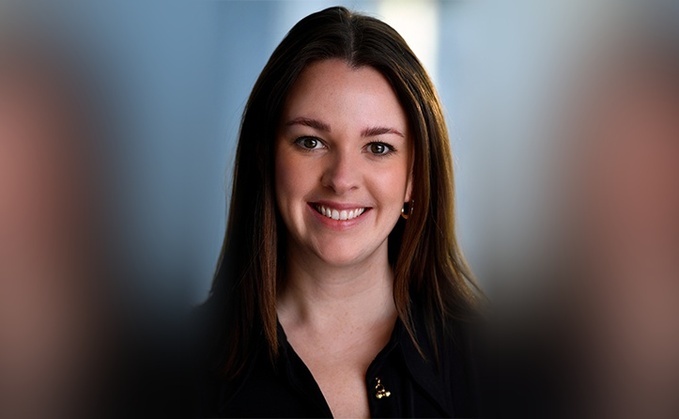
Beth Goldsmith, Responsible Investment Director, Royal London Asset Management
In my conversations with wealth managers, IFAs and fund selectors, one thing is increasingly clear: responsible investment has moved on. The discussion is no longer simply about whether a portfolio should "have ESG" or fund carries a sustainability label. The better question is this: what capability does an investor actually need, and where does it fit in the portfolio?
This matters because advisers are operating in a more demanding environment. Clients want clearer outcomes. Regulation demands greater precision. And portfolio construction has to remain practical. In my view, that pushes the industry away from broad sustainability claims and towards a more useful capability-led approach.
At Royal London Asset Management, our latest stewardship reporting reflects exactly that. Responsible investment is not a separate layer added at the end of the process. It is part of how we think about long-term value, stewardship, risk and opportunity. For advisers, this can be a much more relevant starting point than fund labels alone.
There are four capability areas where I think that shift is most visible.
1. Tilts
In our view, tilts are one of the clearest examples of responsible investment becoming more practical. In simple terms, they allow investors to retain the role of a core equity holding while seeking a better carbon and ESG profile.
This matters because many clients are not looking to replace broad market exposure with something highly thematic or niche. They want an approach that still feels like a core allocation, but one that reflects a more deliberate view on climate, governance and long-term risk. That is where tilts can be compelling.
Our approach starts with benchmark exposure and then applies many small adjustments designed to improve portfolio characteristics without fundamentally changing the shape of the allocation. In our 2025 Stewardship and Responsible Investment Report, we showed how that capability links back to stewardship in practice through a quantitative equity case study, particularly on governance issues. More recently, our tilt white paper has set out why this part of the market is becoming increasingly relevant for advisers trying to balance cost, risk and sustainability priorities.
For me, tilts are not about making passive look active. They are about making core exposure work harder - retaining familiarity while evolving outcomes.
2. Sustainable
Sustainable investing is now more mature, but also more scrutinised. In my view, that is healthy. The market should expect clearer standards, stronger explanations and a more disciplined approach to sustainability claims.
That is why capability breadth matters so much. Advisers are not simply looking for one sustainable equity fund to satisfy a client preference. They are trying to understand whether sustainable investing can be applied consistently across broader portfolio construction.
Our sustainable range has been developed with that in mind, spanning equity, fixed income and mixed assets. Just as importantly, it is built on a defined framework rather than broad aspiration. In 2025, RLAM reinforced its commitment to meeting the highest standards for the Sustainable fund range that was established over 20 years ago, adopting the UK FCA's Sustainability Focus label across all eight UK-domiciled sustainable funds.
In our 2025 Stewardship and Responsible Investment Report, we also showed how that capability connects to real investment and stewardship activity, through case studies that bring the research and engagement process to life. For advisers, that link between framework, regulation and practical investment process is critical.
3. Transitions
If sustainable investing is about identifying companies already contributing positively, transition investing is about recognising that change also must happen in other parts of the market.
This is where I think the conversation becomes more realistic. The global economy will not decarbonise only through pure-play sustainable businesses. It also depends on how banks, utilities, industrials and other high-impact sectors finance and manage the transition.
We use engagement, voting and climate assessment tools to understand which companies are making credible progress and which are not. Our recent work has also highlighted the importance of the just transition, the idea that climate progress must be fair, resilient and mindful of wider social impacts.
For advisers, that matters because it widens the opportunity set and creates a more grounded investment narrative. Transition investing is not about lowering standards. It is about applying them in a way that reflects how economic change actually happens in practice.
4. Exploring ETFs
Exchange-Traded Funds (ETFs) are often discussed as a structure, but I think they are really about accessibility. Advisers increasingly want investment capabilities that are easier to implement, easier to trade and easier to use within model portfolios. That is one reason a responsible approach to ETF capability is strategically important.
What stands out to me is that this is not a story about replacing active management. It is about recognising that the way advisers access investment expertise is changing. The ETF wrapper is increasingly relevant because it brings transparency, flexibility and efficiency into the way portfolios are built.
As we expand in this area, the opportunity is to combine the investment disciplines we already have with a structure that many advisers now actively prefer. Our stewardship reporting underlines the importance of long-term thinking, process clarity and transparency across the business. In our view, those principles matter just as much in ETF development as they do in any actively managed strategy.
For advisers, that means the ETF discussion should not be reduced to pricing or packaging. The more important question is whether the capability inside the wrapper is genuinely useful within a real portfolio context.
Stepping back, I think the bigger shift is this: capability now matters more than category. Tilts, ETFs, sustainable investing and transition approaches each solve a different problem. The right answer will depend on the role a strategy is meant to play, the client objective and the type of portfolio being built.
That is where responsible investment becomes more useful and, ultimately, more investable.
Royal London Asset Management – Stewardship and Responsible Investment Report 2025
Voting, engagement, research, and advocacy help shape outcomes and support better corporate practices. However, voting and engagements may not always apply to a specific Royal London Asset Management fund or strategy, as each will have different investment objectives. Please check the specific product objectives for details.
Past performance is not a guide to the future. Capital at risk.
For professional investors and qualified investors only. This material is not suitable for a retail audience. This is a financial promotion and is not investment advice.
The value of investments and any income from them may go down as well as up and is not guaranteed. Investors may not get back the amount invested. The views expressed are those of the author at the date of publication unless otherwise indicated, which are subject to change. Forward looking statements are subject to certain risks and uncertainties. Actual outcomes may be materially different from those expressed or implied.
Issued in July 2026 by Royal London Asset Management Limited, 80 Fenchurch Street, London, EC3M 4BY. Authorised and regulated by the Financial Conduct Authority, firm reference number 141665. A subsidiary of The Royal London Mutual Insurance Society Limited.