The SPARX Japan Focus All Cap strategy is a high-conviction, quality-driven approach to Japanese equities, supported by strong research capabilities and local expertise. It highlights opportunities from Japan’s improving corporate landscape, alongside key risks and current portfolio themes.
Why is your fund a "fund to watch" and how could it work in an investor's portfolio?
The SPARX Japan Focus All Cap strategy is a compelling strategy to watch as investor attention returns to Japan, supported by improving corporate governance, balance sheet reform and a gradual exit from deflation. The strategy is benchmark‑agnostic and highly selective, focusing on high‑quality Japanese businesses with strong competitive positions and exceptional management, irrespective of market capitalisation.
With a concentrated portfolio of typically 20–30 stocks, the strategy aims to deliver long‑term capital growth while prioritising downside resilience. This quality‑focused, bottom‑up approach has historically helped the strategy navigate market volatility and protect capital during drawdowns.
Within an investor's portfolio, the strategy can act as a high‑conviction core or satellite Japan allocation, complementing more benchmark‑oriented strategies. UCITS format of the strategy is an Article 8 under SFDR, it may be particularly relevant for investors seeking Japanese equity exposure through a strategy that promotes environmental and social characteristics. In addition, its emphasis on durable earnings, strong balance sheets and disciplined valuation makes it particularly suited for investors seeking long‑term exposure to Japanese equities with differentiated alpha potential.
Can you give an overview of the team running the fund and your investment process?
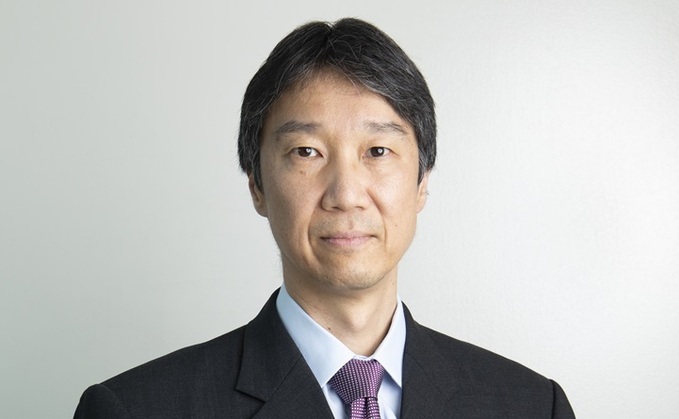
The SPARX Japan Focus All Cap strategy is managed by Masakazu ("Masa") Takeda, who has led the strategy as lead portfolio manager since 2006 and brings over 20 years of investment experience. Based in Asia, he is fully embedded in the local market and supported by SPARX's broader research platform. The investment team conducts over 3,000 research meetings annually and draws on SPARX's proprietary database, which covers approximately 80% of the Japanese equity market and gives analysts and portfolio managers access to more than 40,000 research memos.
The investment process is fundamentally driven and bottom‑up, guided by SPARX's long‑standing philosophy that "Macro is the Aggregate of Micro." Stock selection focuses on identifying "Great Businesses with Exceptional Management at an Attractive Price." Each investment must meet a strict set of quality criteria, including a simple business model, strong balance sheet, sustainable returns on equity and resilient cash‑flow generation. Valuations are assessed with a long‑term horizon, typically 3–5 years, and the strategy does not target a specific tracking error or turnover level. ESG considerations are integrated throughout the research process to assess material risks and long‑term sustainability.
What do you see as the key opportunities and risks for your strategy?
Japan presents a growing opportunity set as corporate governance reforms, shareholder‑friendly capital allocation and balance‑sheet efficiency continue to improve. The strategy is well positioned to benefit from these changes by selectively investing in high‑quality companies that can compound value over time, often overlooked by benchmark‑driven investors. Opportunities also arise from market inefficiencies across the market‑cap spectrum, particularly among companies with strong franchises, pricing power and long growth runways. The strategy's flexibility allows it to invest where fundamentals are most compelling rather than where index weights are highest.
Key risks include periods of strong factor‑driven or momentum‑led markets, where quality‑focused approaches may lag, as well as macro‑economic shocks affecting Japanese equities broadly. The strategy's concentrated nature can also lead to higher stock‑specific volatility in the short term. However, the emphasis on quality, balance‑sheet strength and downside protection is designed to mitigate these risks over a full market cycle.
Can you highlight a couple of current investment opportunities within the portfolio (stock, sector or thematic)?
The strategy continues to focus on high‑quality compounders across a range of sectors where management quality and long‑term earnings visibility remain underappreciated. Current positioning includes opportunities in financials, benefiting from gradual interest‑rate normalisation and improving profitability, alongside selective industrial and service businesses with strong domestic franchises. A recent highlight has been Tokio Marine Holdings, whose shares rose sharply following the announcement of a strategic partnership with Berkshire Hathaway. Tokio Marine has been a long‑standing holding in our portfolio and represents Berkshire Hathaway's second investment among our holdings, following Mitsubishi Corporation.
We believe this development reinforces the long‑term attractiveness of Japan's non‑life insurance sector. Following Japan's "Big Bang" financial reforms in the 1990s, industry consolidation has resulted in three major groups controlling roughly 90% of the market, an oligopolistic structure rare globally. In addition, legacy cross‑shareholdings have created substantial unrealised gains, supporting overseas expansion and shareholder returns.
Since 2022, the strategy has invested in all three major Japanese non‑life insurers. At the time of investment, differences between Japanese accounting standards and IFRS meant earnings power was understated, resulting in attractive valuations. We intend to maintain our holdings across all three insurers.
Note: Reference to particular securities and their issues are for illustrative purposes only and are not intended to be, and should not be interpreted as, recommendations to purchase or sell securities. Opinions are based on current market conditions and are subject to change without prior notice.
Important Notice
This article has been prepared by SPARX Asset Management Co., Ltd. ("SPARX") for informational purposes only to professional investors who are expected to make their own investment decisions without undue reliance on this article. The views and strategies described may not be suitable for all investors. Under no circumstances is it to be used or considered as investment advice, a recommendation to buy, an offer to sell, or a solicitation of an offer to buy or sell securities in any vehicle managed by SPARX. An offering will be made only by the confidential offering memorandum, subscription agreement and other relevant documentation of any funds managed by SPARX which should be read in their entirety. We accept no liability whatsoever for any direct or consequential loss arising from any use of this article or its contents. The information is intended solely to report on investment strategies and opportunities identified by SPARX. Opinions and estimates offered constitute our judgment and are subject to change without notice, as are statements of financial market trends, which are based on current market conditions. SPARX and its affiliates do not warrant the accuracy or completeness of any of the information or data contained herein. References to specific securities and their issuers are for illustrative purpose only and are not intended to be, and should not be interpreted as investment advice or, a recommendation, offer or solicitation for the purchase or sale of any financial investment. This article does not constitute tax advice and as such investors should be advised to consult their own tax advisers regarding the tax consequences of their investment activities. Investment return and principal will fluctuate, so that a client's initial investment may increase or decrease. Investing in securities markets involve risks like those arising from stock and bond markets, currency exchanges rate and interest rate volatility. No part of this material may, without SPARX prior written consent be copied, reproduced or published by any recipient for any purpose. Past performance is not indicative of future performance. Registration as an investment adviser does not imply any special skill or training. There can be no assurance that SPARX's investment objectives will be achieved or investment strategies will be successful.