OPINION - EMERGING MARKETS
Categories: Emerging Markets
Topics: Gdp | Brazil | China | Emerging markets
How pride and prejudice colours our perception of emerging markets
The words ‘pride’ and ‘prejudice’ may most readily be associated with the tale, penned by Jane Austen, about manners, morality and marriage among England’s landed gentry in the nineteenth century.
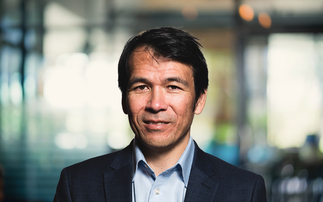
But they also encapsulate much of the West’s view of the developing world now, in the opinion of Jerome Booth, head of research at EM managers Ashmore.
As reality dawns in coming years, Booth says, developed world investors will increasingly ask, ‘how does the EM world affect the developed world?” rather than their present approach of believing what really matters is how developed, ‘core’ economies use power over developing, ‘peripheral’ ones.
EMs represent 50% of global GDP, based on purchasing power parity, and one third of it when FX rates are accounted for.
Additionally, EM central banks, nursing healthy surpluses, own 50% of US Treasuries – compared to 90% of Brazilian debt owned by Brazilians. About 70% of all EM FX reserves are in Treasuries, he adds.
Adding to EM firepower, the US Federal Reserve’s $73bn of usable foreign reserves – effectively its own reserves excluding gold - is truly dwarfed by China’s $2.5trn, Saudi Arabia’s $1.3trn, South Korea’s $350m, Indonesia’s $330bn and Brazil’s $220bn.
In the near-term, Washington has convinced EMs to shackle their influence – giving it too free a rein could be self-harming, not least while America’s banking system sputters.
But Booth says in future the G20 that includes seven EMs, not the G7 excluding them entirely, will be the policy-maker to watch.
Power structures, such as those in the G20, will be formed to a degree by purchasing strength, increasingly held by EM companies for goods, and countries when it comes to FX.
Investors, particularly those approaching retirement, should remember this, Booth says.
Saudi Arabia and Russia hold sway for oil, whereas China increasingly does for other commodities.
Booth says: “EM countries and companies will increasingly be pricing goods in global markets, as price makers, not price takers. You need to be using a model based on global GDP to answer, Who will have pricing power?”
This question is arguably less important for developed world investors in stable societies and closed economies expecting neither inflation nor deflation. For the rest of us, whose investments, home currency and inflation hang more on global factors, it is more germane.
Booth says: “EM central banks will be the determiners of where global FX rates go over the next five years.”
They face the threat of inflation at home, he adds, and interfering with their currencies is the main path for them to tackle it if they are unwilling to hike rates while the Fed puts its own on hold.
Booth says: “There will always be developed world investors who do not get it – who do not want to question what they like to believe. Models, principles and old views on EMs – they are all good examples of things that outlive their usefulness.”
One thing about prejudice is how difficult it is to hold onto once facts get in the way.
Categories: Emerging Markets
Topics: Gdp | Brazil | China | Emerging markets
COMMENTS
THE BIG QUESTION
DIGITAL EDITION
@INVESTMENTWEEK