News - Economics / markets
Categories: Economics / Markets
Topics: Bank of england | Inflation
The Bank of England has estimated its £200bn asset purchase program has raised inflation by as much as 1.5%.
In the latest quarterly bulletin released today, the Bank used a variety of methods to assess the impact of QE on inflation and growth in the UK.
It concluded CPI inflation was likely between 0.75%-1.5% higher as a result of the asset purchase program, after it boosted asset prices and GDP growth.
The full range of esimates of the impact of QE on inflation in the report were between 0.75% and 2.5%
The Bank conceded the figures are an estimate and are "highly uncertain" but it nevertheless gives a rough indication of the impact of printing money.
In the report it added economic growth had also been given a boost from QE.
Authors Michael Joyce, Matthew Tong and Robert Woods - from the Bank's Macro Financial Analysis Division - said: "If we compute the range across the different estimation methods, this would suggest that QE may have raised the level of real GDP by 1.5% to 2%."
They added despite the uncertainties over the forecast, the analysis suggested the effects of QE were "economically significant".
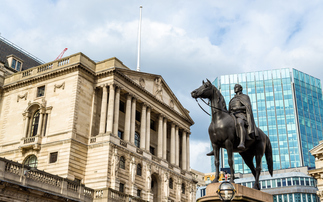
The estimations suggest much of the recent rise in inflation - CPI is currently at 4.5%, well above the 2% target - could be sort-lived. This is in line with previous comments from the Monetary Policy Committee (MPC) headed by Mervyn King (pictured).
However, the report added more QE would not necessarily have the same impact.
"The economic and financial circumstances in which further asset purchases or sales are made may be very different from those that prevailed in early 2009, so it cannot be assumed that the magnitude of the effects will necessarily be the same," it said.
Categories: Economics / Markets
Topics: Bank of england | Inflation
Comments
The big question
Updating your subscription status
IW Fund Centre
Run in conjunction with Funds Library, the IW Fund Centre combines qualitative and quantitative data on a huge range of funds.
Have your say
This week: What will happen to the eurozone if Greece leaves?
Job of the week
Events
12 Jun 2012 - 12 Jun 2012
The Cumberland Great Cumberland Place, London W1H 7DL
05 Jul 2012 - 05 Jul 2012
Royal Albert Hall, London Kensington Gore London, Greater London SW7 2AP
BofE
King and his compatriots are not fit to run a household budget let alone the UK economy. The impact of QE on inflation is a factor of £200billion in relation to the money supply. And more QE will have a similar impact on inflation every time. The forecasts for lower inflation in the near future (even taking the VAT rise out of the recent increase in prices) are wide of the mark - greedy oil companies, fuel bills driven by French and german suppliers only interested in protecing their own nationals against price increases, and supermarket chains cashing in at every opportunity, means that prices will continue to rise. 5% inflation will be the norm for years to come.
Posted by: Bill Wells
20 Sep 2011 | 08:01
Complain about this comment