News - Uk
Categories: UK
Topics: Government | Bank of england | Uk election 2010
We look at how the economy has fared over the past year under a coalition government.
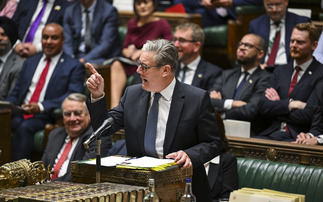
The past 12 months have been a rollercoaster ride for the UK economy. To be fair to Cameron, Clegg et al, they did not inherit the most blossoming set of economic indicators.
Inflation, for example, had already been flagged as a concern. Having dropped from a September 2008 high of 5.2% down to 1.1% 12 months later, it had begun its ascent once more, overshooting the government’s 2% target to reach 2.9% in December 2009.
Just before the coalition government took the reins in May, inflation hit 3.7%. For the rest of the year, the figure hovered between 3.1% and 3.7% until it reached a whopping 4.4% in February 2011, the UK Consumer Prices Index (CPI)’s highest level for more than two years.
Global factors including higher food, fuel and clothing costs were blamed for the rise.
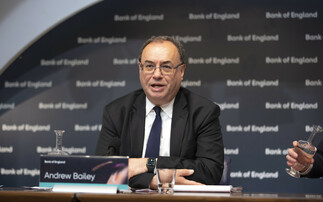
At the time, Mervyn King, the Bank of England governor, warned CPI could top 5% in the near term because of rising inflation expectations and higher commodity prices.
F&C’s head of UK equities, Peter Lees agreed, telling Investment Week in March given the efforts of central banks around the world he expected inflation would not start to fall until July
“Inflation will peak at about 5% and we think like-for-like inflation should start to come down after July,” he said.
Persistent inflation unsurprisingly catapulted interest rates to the top of the agenda. The pressure has been on the Bank’s Monetary Policy Committee to raise rates from the historic low of 0.5% to keep inflation under control. However, the majority of the MPC has remained cautious, fearing an increase in rates could threaten the fragile recovery.
Seven out of nine committee members were in favour of keeping the base rate at 0.5% for the final three months of 2010.
For the first quarter of 2011 the MPC has been divided six-three against a rate rise, with Andrew Sentance favouring a 50bp hike and Spencer Dale and Martin Weale pressing for a rise of 25bp.
As we approach the first anniversary of the coalition’s tenure, bank rates remain at 0.5% for the 25th month in a row. Yet speculation around interest rate hikes has been endemic and the industry is clearly torn.
Last month M&G’s bond manager Jim Leaviss clashed with Artemis’ James Foster over rates. Leaviss argued it would be wrong to take action now, while Foster warned without an immediate rise, inflation expectations risk becoming embedded.
Azad Zangana, European economist at Schroders, expects the balance between growth and inflation to improve in the second half of the year, prompting the Bank to raise interest rates – “probably in August”.
However Ignis’ Stuart Thomson last week took an ultra-dovish position, saying rates should not be hiked until February 2012.
The uncertainty in the industry reflects the volatility in the economy. With official estimates showing the UK economy grew by 0.5% in the first quarter of 2011, avoiding a double dip, the goal posts have moved again.
Whether interest rates go up in August or not; inflation spirals or plummets; or GDP rises or falls, it is clear the economy’s rollercoaster ride has a long way to go before it comes to a halt. Year two for the coalition is set to be just as chaotic as year one.
by Rachel Dalton
October 2010 – Reducing the annual allowance (AA) and lifetime allowance (LTA)
- In October the Treasury announced the AA would fall from £255,000 to £50,000 and the LTA would fall from £1.8m to £1.5m in April 2011.
October 2010 – Raising the state pension age (SPA)
- The government announced during the October Spending Review the SPA will rise to 66 by 2020 instead of 2026.
- The government plans to link the SPA directly to longevity, which will increase it automatically.
December 2010 – Removing the requirement to annuitise at age 75
- As an interim measure, the government lifted the age to 77 in June 2010, and the requirement to annuitise was completely removed by April 2011 after December’s consultation. The paper also introduced flexible and capped drawdown.
January 2011 – Ending the default retirement age (DRA)
- The government announced it will abolish the DRA of 65 by October 2011. Employers can no longer retire workers on the grounds of age.
March 2011 – Hutton’s public sector pension report
- This recommended an end to final salary schemes and shifting public sector workers towards career average arrangements by 2015.
April 2011 – Universal State Pension
- This live consultation paper on a flat-rate, £140 per week pension proposes an end to contracting-out and means testing from 2015.
April 2011 – Early access to pension funds
- The government consulted from December to February on allowing access to pensions before age 55. In April, the treasury announced it would not consider any form of early access as it would not improve pension saving and would overburden the industry.
by Will Roberts
Emergency Budget
- In the June 2010 emergency Budget, Chancellor George Osborne unleashed a tough package of cuts and tax rises.
- Capital gains tax jumped from 18% to 28% for higher rate taxpayers.
- VAT rose to 20% from January 2011.
- The personal income tax allowance increased by £1,000 to £7,475, effective from April this year.
- Corporation tax will be cut from 28% to 24% over the next four years
Tax simplification
- The Office for Tax Simplification launched in July 2010.
- In the March 2011 Budget 43 complex tax reliefs were abolished and 100 pages removed from the tax code.
March Budget
- Corporation tax was slashed by 2% from April – instead of the previously announced 1% – and would continue to fall by 1% in each of the following three tax years.
- Income tax relief on Enterprise Investment Schemes was increased from 20% to 30% from April 2011.
- The existing annual charge for non-doms living in the UK for 12 years or more was increased to £50,000, up from £30,000.
Categories: UK
Topics: Government | Bank of england | Uk election 2010
Comments
The big question
Updating your subscription status
IW Fund Centre
Run in conjunction with Funds Library, the IW Fund Centre combines qualitative and quantitative data on a huge range of funds.
Have your say
This week: What will happen to the eurozone if Greece leaves?
Job of the week
Events
12 Jun 2012 - 12 Jun 2012
The Cumberland Great Cumberland Place, London W1H 7DL
05 Jul 2012 - 05 Jul 2012
Royal Albert Hall, London Kensington Gore London, Greater London SW7 2AP