INTERVIEW - ABSOLUTE RETURNS
Categories: Absolute Returns
Topics: | Markets | Ft | Portfolios | Ftse 100 | Blackrock | Derivatives | Absolute return funds
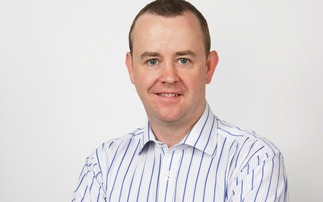
Mark Lyttleton is probably the one name that comes to most people’s lips when describing a successful, popular implementation of an explicitly absolute return strategy. His fund’s record is of consistent positive net of fees returns through the market cycle, in a relatively smoothed profile. In other words the textbook definition of absolute returns – but what really goes on inside his funds?
What do you mean by absolute returns?
ML: For us at BlackRock, absolute return means making money over a rolling 12-month period.
It is not about beating a target or anything like that; it is just making money and not losing it. At the end of the day the underlying investor gives us money to try and make them money.
How is that absolute return defined?
ML: I think Libor is a good starting place because, essentially, if all our money was sitting in the bank, you would be earning something around Libor. The fund does have performance fees, but we have to earn more than Libor for us to start earning a performance fee.
How should investors use the fund as part of their portfolio process?
ML: You get the best out of the fund if you just hold on to it for quite a long time – we will try and churn out a solid, respectable return each year, and as you compound that up over a number of years, it will end up looking like quite a nice number.
What is the core of your investment process? What is sitting in the engine room?
ML: The engine room of the fund is UK equities. We try and construct a portfolio with no leverage, quite low market exposure – so our longs will nearly match shorts. We will not necessarily be entirely market neutral. We try and buy shares we think are going to go up and short shares we think are going to go down.
There is a crucial word here – ‘pairs’.
ML: We have three strategies. Naked longs are shares we think are going to go up in value, so we will buy them. Naked shorts are shares we think are going to go down in absolute value, so we will short those, and hope the share price falls and make money from that. Pairs are a naked long and a naked short stuck together and they are usually companies in the same sector, so they will be bound by a similar kind of market or industry dynamic.
For example, we might be long BP and short Shell. We will be taking very little market exposure because we are long of one and short of the other, and they would be about the same size. We would be taking very little oil price or sector exposure because they are both oil companies. And we would be taking the view that BP has the better potential.
That can be replicated across a number of sectors –15 to 20 sectors as we sit here today. Normally, over the time of the fund, we have had around 50%-60% of the portfolio invested in pairs.
How big is your exposure to simple, naked positions?
ML: The rest of the portfolio would be naked longs and shorts. What the pair does, is give you a nice solid, low volatile base, to earn some alpha on – picking the right stocks in sectors, and it is pretty much market neutral.
There will be a little bit more volatility around the naked longs and the naked shorts because obviously they have got market exposure.
Do you use many options or derivatives?
ML: We have done very little option activity in the portfolio. There have been one or two instances when volatility was high and we were being paid to write some calls, but on the whole we tend do it just through the simple equity, because it is big and liquid.
Are you ever tempted to use simple market puts and market calls or to go out and buy a FTSE 100 put?
ML: No. I run UK equities – I would hope to be able to find something that might do better than the market, although we might use a bit of index future just to limit our market exposure.
So, your stockpicking strategy is to short a weaker company and buy a stronger company. Does this open you up to sector risk? You might pick the worst and the best oil stock, but what happens if all oil stocks tank?
ML: Your long is going to go down but your shorts are likely to offset it, so you have not really lost anything. You just have to hope your good oil company gets sold less aggressively than your bad oil company. In which case, you can still make money.
Are you ever overall short on the portfolio?
ML: Actually, during 2008, one of my regrets is we did not get more short of the market than we were. So, effectively, we were market neutral and could have been a bit more aggressively short. I am probably a natural optimist and, over the fullness of time, I think the portfolio will have a small long bias. Shorting is definitely a skill and a bit of an art. You have to be brave sometimes and close your eyes when it is not going your way. But as an overall fund level we probably have not been more than 2%-3% short at any stage.
What happens if the markets suddenly fall?
ML: We do not have very much net market exposure. So if you are comparing us to a long-only fund, hopefully we would perform a lot better. If the market fell 30%, a long-only fund, would fall 30%, plus or minus a bit. If we were 10% net long, theoretically we should fall 3%, all things being equal and no alpha generation. We would hope to do better than that. We would hope to find the shares that are going to fall down more than the market. We may even flex the portfolio and be net short, in which case we can make money going down as well.
What would happen then if the market was absolutely booming - up 60% as it has been? How would you compare with your traditional UK long only equity fund?
ML: Again, the opposite is exactly true. If we have 10% net exposure, we are going to be running with one hand tied behind our backs compared to the market – there is no way around that, you have to give up a little bit of the good times.
Let us look in more detail at stockpicking. What is a bad stock?
ML: I do not think there is any such thing as a good or a bad stock. There are good companies and bad companies, but a bad company can still be good stock if its valuation is incorrect.
In March 2009, plenty of companies had severely challenged business models and balance sheets that were entirely inappropriate. Some of those stocks have gone up 300%-500% since then. They may have been bad companies but not necessarily bad stocks because of the starting valuation.
We are very conscious of downside protection. In a perfect world we want companies with strong balance sheets, attractive business prospects, high barriers to entry, pricing power, and a history of innovation and strong management teams – all on really low valuations.
Over the last couple of years your stockpicking has been very macro driven. What has that meant in reality to your investment process?
ML: We have had to ask questions like: Is China growing? Has a company too much leverage? Is it linked to the UK consumer? What is the oil price? That is not always the case, and we are coming to a time in the stock market cycle where there are going to be some macro drivers, but probably not as many as there have been over the last couple of years.
You are going to be able to drill down into the stock, individual stocks are going to move in a much more volatile fashion, and stocks are going to move much more on the basis of their prospects rather than their sector or macro environment.
There are not many ideal, quality companies out there and everyone else is trying to find them as well, can you give an example of an ideal stock?
ML: Inmarsat is one of the world’s leaders in satellite telephony, especially as its competitor’s satellites keep falling out of the sky and their’s do not. They have ended being a global winner almost by default.
What is the average turnover in your portfolio every cycle?
ML: On average, the portfolio’s turnover has been a bit under 200%. The turnover of the long book is a bit smaller than the turnover on the short, and that can vary quite a lot depending on how volatile the market is. If you are talking about a very volatile, choppy market, the turnover could go up to 300%-400%. In quiet, trending markets, it might be below 100%.
What is your view of the markets over the next two to five years?
ML: I can see a lot of value. Companies have positioned and right sized themselves for an economy, or a set of economic conditions, that are going to remain quite tough.
I can see a scenario where the global economy slowly recovers, but I am not getting excited. I do not think we are going to be back to the kind of global growth we saw in the first half of the decade. I think it is going to be a lot slower than that, especially in the UK and the US.
Emerging markets are going to remain quite robust and, in this environment, once the top line starts to recover in some of these companies, you are going to get some quite spectacular profit growth. The market is not quite reflecting that yet.
I can see a slightly perverse situation where the UK economy is just coming out of recession, yet companies’ profit margins have remained quite high and could get to new highs. But we are still in the early stages of a global economic recovery.
If you look at the data, labour productivity has increased during the recession. That is an extremely unusual event. You are going to get revenues coming first, falling through to the bottom line very aggressively and then companies will reinvest back into their business.
If you talk to someone like Andrew Smithers – an independent economist – he maintains profit margins were already at extenuated highs even before the current downturn. How on earth can they go even higher?
ML: We are already beginning to see the early signs of it because costs have been cut far more aggressively than anyone was anticipating.
What about QE and its effect on shares when it is turned off ? Do you think there will be a sudden flight from risk and the stock market will crumble?
ML: The market is already pricing in 1.5%-2% interest rates by the end of next year. One should not be surprised by interest rates going up. As for QE slowing or even stopping – when it happens, I am sure the market will be nervous. You could say the economy is growing at such a pace it is no longer necessary, in which case, isn’t that healthy?
Is it fair to say you have a fundamentally bullish view of the next two to three years?
ML: Optimistic.
But aren’t shares horribly over-priced, even allowing for that rebound in profits you mentioned earlier?
ML: We are not even in the steepest part of the rebound of the profit cycle over the next two years. What about British Airways moving from losses to profits? Have we not got Lloyds Bank going from 10 billion of losses to five billion of profits? This is the bit of the cycle where the past 12 months’ P/E ratio has become less relevant because the numbers are so crazy.
David Stevenson is a Financial Times columnist and consultant. Email him at davidcstevenson@gmail.com
Categories: Absolute Returns
Topics: | Markets | Ft | Portfolios | Ftse 100 | Blackrock | Derivatives | Absolute return funds
COMMENTS
THE BIG QUESTION
DIGITAL EDITION
@INVESTMENTWEEK