FEATURE - EMERGING MARKETS
19 Jul 2010 | 07:00
Categories: Emerging Markets
Tags: Practical
Dragon Capital's Dominic Scriven on Vietnam's compelling investment story
Vietnam offers one of the strongest and most compelling investment cases for those looking for the diversity and opportunities for income generation which Asia provides. As domestic and European markets continue to be adversely impacted by the impact of PIIGS concerns, by deploying capital in Vietnam, UK and European investors can tap into the potential for strong, risk adjusted returns.
ADVERTISEMENT
Vietnam has been unexpectedly volatile since emerging as new market in 2005-06, but this reflects its raw capitalist energies. Indeed, it manifests the growing pains typical of frontier countries, as greatly aggravated by global crisis, but its long-term promise is undiminished.
The predictions of economic Armageddon never drew much water given the structure of the economy. Most of the country is still employed on small farms and in small businesses, which tend to be highly responsive to economic conditions, have very low levels of debt and most interestingly have diversified assets.
The dollar is a known component of savings and account for an astonishing 27% of official deposits. Despite all the volatility in Vietnam’s financial system, consumption continued growing strongly with retail sales increasing 33% in 2008 and 24% in 2009. In other words, the wealth destruction from a financial collapse that usually impedes GDP growth was low because Vietnam’s wealth was effectively hedged by diversified savings – in particular in gold.
In our view, the Vietnamese market has stronger growth potential than many others in Asia following the post-stimulus down cycle, with real GDP expected to continue to grow rapidly. This growth has solid foundations, with both exports and domestic markets thriving, but it will get an extra boost from a unique feature of the Vietnamese economy: this is the expansion of private-sector banks and their accelerating mobilisation of the country’s reserves of hidden wealth.
Vietnam is still a cash-based economy and approximately $50bn – equating to around 50% of GDP – is held outside the financial system in the form of around $10bn in dollars and $40bn of gold. Modernising the financial services system and bringing this capital into play will greatly add to asset appreciation and macro growth.
The abundance of foreign assets relative to debt helped sustain the financial system during the financial crisis. The normal experience in emerging markets is a boom-bust accompanied by currency devaluation. This has not materialised in Vietnam despite prognostications. And we have seen this once before when the sovereign debt market collapsed in the Q2 2008 from foreign investors selling bonds en masse. The market recovered as the domestic banking system stabilised the market.
Vietnam dong weakness has been concerning but the Government has managed it well and – with rival currencies appreciating - it has primed export competitiveness and foreign direct investment. Currency and reserve losses obscure the fact that the country has huge net foreign assets via the gold/dollar hoard, which is further reinforced by minimal sovereign debt.
Recent data from the Government of Vietnam showed GDP grew by 6.4% year-on-year in Q2, in line with expectations. In the short-to-medium term, manufacturing – which accounts for 22% of GDP – will be key to a sustained economic rebound. Although a trade deficit will linger, we expect it to moderate as exports develop and imports slow down on the back of higher interest rates. The manufacturing sector expanded by 7.6% year-on-year in the first semester of the year, while construction grew by nearly 10%. Industrial output, moreover, appears to be displaying signs of momentum with growth of 14.6% year-on-year in June compared to 13% in April.
Investing in frontier markets carries inherent risks. There are relatively few established funds which invest in Vietnam and investors looking for the upside these markets offer should consider a number of factors before deploying capital.
Corporate governance: investors from outside the country should ensure the emerging markets funds into which they invest have robust corporate governance controls and rigorous risk-profiling systems.
Experts “on the ground”: first-hand experience of the fund managers of the companies in which the fund invests is, in our view, crucial. Personal relationships are very important in Vietnam – and across Asian frontier markets generally, many of which operate in a culture of trust – and investors should seek reassurance that the fund manager has a comprehensive understanding of market conditions, investee company operations and downside risks.
Longevity: track record is even more important in less mature markets than in better established areas. In Vietnam, the access that is afforded by being a longstanding investor into the country and having seats on many company boards, is a significant advantage.
The Vietnamese market is developing rapidly as a serious financial platform. It now has 620 quoted companies, dozens of new listings in the pipeline and active capital raisings. While privatization of giant strategic state-owned enterprises has lagged, umpteen small and medium ones have partly taken their place. Major entrepreneurial companies have also migrated to the exchange. Valuations are attractive: 12x for 2010 and 10x for 2011, with about 20% net profit growth in both years.
The financial system and wider economy in Vietnam is maturing rapidly, driven by rise of private sector banking. This maturation will have a knock-on effect on the manner in which growth can be maintained; growth will remain high, but with more stability as monetary/fiscal policy improves, cyclical volatility is smoothed out and capital markets are modernised.
The interesting lesson learned from watching Vietnam through both its own financial crisis and then the global one is that it is refining its investment thesis. Last year proved the national foreign asset position is significant for consumption, financing, and investment. Domestic savings outside the financial system provide a fully independent capital flow not subject to shifts in world markets or sovereign debt problems in the Mediterranean. As this money finds its way from households to banks, markets will deepen and domestic private investment will become the defining feature of growth.
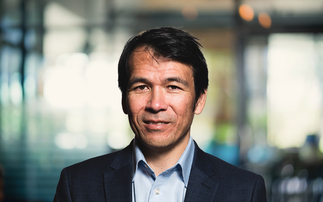
Dominic Scriven is CEO of Dragon Capital
Categories: Emerging Markets
Tags: Practical
COMMENTS
GOSLING'S GROUSE
RELATED INFORMATION
ADVERTISEMENT
DIGITAL EDITION
S&P INDICIES
S&P Indices, in association with Investment Week, cordially invites you to a complimentary half day seminar, where leading investment banks and institutional investors will debate theoretical diversification benefits, lower volatility exposure, forward roll strategies, and contango.
When: Thursday 16th September 2010
ADVERTISEMENT
ADVERTISEMENT