Go to Investment Week homepage
  • Site search
  • Job search
  • Subscribe
  • Newsletter
  • Mobile
  • RSS
  • Home
  • News
  • Opinion
  • Fund Manager Views
  • Interviews
  • Sector Analysis
  • Features
  • Events
  • Audio/Video
  • Jobs
  • Research Centre
  • Share Centre
  • About us
  • Contact us
  • Advertise
  • UK
  • Global
  • Fixed Income
  • Managed
  • Specialist
  • Markets
  • Goslings Grouse
  • Contrarian Investor
  • Leader
  • The Alchemist
  • The Big Interview
  • Fund Manager Focus
  • Funds to watch (RADAR)
  • Practical
  • Technical
  • The Big Question
  • Conjecture
Where am I? breadcrumbs arrow image Home breadcrumbs arrow image  Feature breadcrumbs arrow image Investment breadcrumbs arrow image Investment Trusts

FEATURE - INVESTMENT TRUSTS

Still going strong

29 Jan 2010 | 09:00
Mike Woodward

Categories: Investment Trusts

Topics: | F&c | Oeics | Rdr | | Aifm | 15th anniversary

  • Tweet

With a history that goes back over 140 years, the investment trust sector has seen it all, but what does the future hold?

In the 15 years since the launch of Investment Week there has been an awful lot of water under the bridge of investment. From the steady market rises of the mid to late 1990s to the ‘irrational exuberance’ of the tech boom and subsequent bust; from the wilderness years of the early 2000s to the ‘Baghdad bounce’ of 2003; and from credit feast to credit famine, investors have had many occasions to ponder the warning “the value of investments can go down as well as up”.

At the product level too, we have seen many developments. Unit trusts have largely given way to OEICs, and the open-ended fund universe has also had to contend with successive UCITS directives aimed at levelling the playing field for fund distribution across Europe.

So what of the humble investment trust in this pan-global, electronically settled world? Well, in spite of their (frankly undeserved) reputation as being somewhat old-fashioned, time has not stood still for these founding fathers of the retail investment industry. Even some of the largest and oldest trusts, such as Foreign & Colonial Investment Trust and Witan, have embraced modern concepts like outsourcing and multi-manager. And with the Retail Distribution Review promising to remove commission bias from the sale of investment funds, investment trusts will be as worthy a choice as ever in the years to come, and perhaps even more so.

Open or closed?

A glance at the performance graph below will show that there has been little to choose in performance terms between equivalent open-ended and closed-ended funds. Investors in F&C’s own US Smaller Companies funds have been broadly similarly rewarded over the past 15 years, while those in Fidelity’s Special Values investment trust have done rather better than investors in the stellar-performing Special Situations fund. Over different time periods one structure might perform better than the other, even though the investment trust and the OEIC have the same manager and broadly the same portfolios.

So why choose an investment trust over an OEIC? Well, for one thing the ‘what you see is what you get’, single-priced transparency of an OEIC can be rather muddied by the effects of commission and upfront fees. That isn’t to say there are no fees involved in buying investment trust shares, but the flat fees for dealing imposed by most stockbrokers are a little easier to quantify. The investment trust also has a few unique features that can work in investors’ favour over time.

The first of these hinges on the ‘closed-ended’ nature of the investment trust. Share prices are dictated by supply and demand, and will lag the net asset value of the trust (trade at a discount) if there are more sellers than buyers. To meet a wave of redemption requests, open-ended funds will often have to dispose of liquid positions they would rather not exit if they had the choice – selling the family silver, if you like. Investment trust managers can take a longer-term view with their investments as they do not have to sell holdings to meet redemptions.

Of course this can be less than ideal for the investor wishing to exit, who may have to accept less than the underlying asset value of his shares. But for the canny buyer, the ability to pick up shares at a discount can mean an extra boost for his investment when sentiment improves and the share price and net asset value converge. This may take a while, which is why investment trusts (like other equity-based investments) are best viewed as a longer-term investment choice.

Gearing up

The ability to gear, or borrow money to invest, is another two-edged sword that works best over longer periods. In a falling market, a geared investment will take a proportionately bigger hit than an ungeared investment, as the net asset value falls but the value of the debt remains constant. But in a rising market, the geared investment does proportionately better, as the outstanding borrowing becomes a smaller part of the overall asset value. If you believe equity markets will rise over time – which, after all, is why we are all in this business – then the upsides of gearing (as long as the borrowing is at a favourable rate of interest) should outweigh the downsides.

Governance

The financial crisis of the last couple of years has turned the spotlight on to corporate governance, and here again investment trusts have an advantage. As listed companies, each investment trust has its own independent board, whose duty it is to act in the interests of shareholders. The manager of the trust must act within the parameters set out by the board, so the kind of undue risk-taking that fomented the crisis should be less likely to occur. Because the board must keep shareholders’ interests at the forefront, investment trusts are also arguably less likely to fall prey to fads and fashions, where investment houses might rush out a fund in a ‘hot’ sector but divert resources elsewhere when the trend goes off the boil.

But while they may be less prone to changing fashions, investment trusts are also a good way to access less liquid areas such as commercial property and private equity, where again the closed-ended structure allows a longer-term view to be adopted.

Opportunities and threats

Looking to the future, the biggest opportunity for investment trusts is probably regulation-driven, in the form of the Retail Distribution Review. Wealth managers at the top end of the advisory market have been enthusiastic supporters of trusts for many years, and the increasing levels of professionalism the RDR seeks to embed into the wider market will – we hope – lead to more diverse portfolios for the end investor, encompassing a range of vehicles chosen for their investment merits alone.

However, regulation also poses the greatest threat to the 142-year-old investment trust sector. European moves to tighten up controls on ‘alternative investment funds’ have caught investment trusts within their scope – something the industry feels is probably an unintended consequence, as the investment trust sector is a peculiarly British one, for which few if any EU member states have anything comparable. The Association of Investment Companies continues to lobby the British and EU governments on this issue, and early indications are that its voice is being heard.

The picture on the Alternative Investment Fund Managers (AIFM) Directive will become clearer later this year. But as we raise a glass to Investment Week’s 15th birthday, we hope we can also toast the continued health of the investment trust sector, which has served its investors well for more than 140 years, yet remains as relevant today as it has ever been.

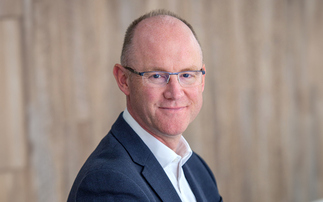
Mike Woodward, head of investment trusts at F&C Investments

  • Print
  • Share
  • Comment
  • Still going strong

More investment trustsnews

  • Attack of the arbs: The trusts at risk from activists

  • IT dividend rule 'could hit shareholders in the pocket'

  • Train: How I outperformed FTSE All Share during 2011

  • Fees of the future

Email alerts

  • Get similar articles direct to your inbox

Related information

Recommended reading

  • F&C, Makis Kaketsis

  • Woodford ditches Tesco as Buffett buys

  • Would you invest in Facebook now?

  • Rogers wary of US equities despite roaring markets

  • Conjecture: High Yield Bonds

Categories

  • Investment Trusts

Topics

  • F&C

  • Oeics

  • RDR

  • Aifm

  • 15th anniversary

Categories: Investment Trusts

Topics: | F&c | Oeics | Rdr | | Aifm | 15th anniversary

  • Comment
  • Email to a friend
  • Print

COMMENTS

There are no comments submitted yet. Do you have an interesting opinion? Then be the first to post a comment.Post a comment

MOST COMMENTED ARTICLES

  • Spurs boss Redknapp cleared of tax evasion charges

  • FATCA: US Treasury updates proposals to ease burden

  • Woodford ditches Tesco as Buffett buys

  • Buffett: Bonds should come with a health warning

  • Investors 'twice as likely' to choose active funds over trackers - Lipper

AUDIO/VIDEO

  • Conjecture: High Yield Bonds

  • Conjecture: Global Emerging Markets

  • VIDEO: Why Japan is set for a recovery in 2012

  • Conjecture: Global Equities

  • Conjecture: Fixed Income

THE BIG QUESTION

fragment image

Every week, we ask the experts for their views on the latest topics in the industry

  • View all

EVENTS

  • fund5live

  • Senate Spring Investment Conference

  • Absolute Returns Focus 2012

  • Most read
  • Popular topics
  • Related articles
  • Would you invest in Facebook now?

  • RBS said to dismiss four bankers as FSA probes LIBOR manipulation

  • F&C, Makis Kaketsis

  • Woodford ditches Tesco as Buffett buys

  • Could Ireland be this year’s recovery play?

  • Close Brothers
  • IMF
  • Inflation
  • Italy
  • Portugal
  • Schroders
  • Spain
  • US
  • Warren Buffett
  • eu
  • The Big Question: What are your predictions for 2012?

  • Is the UK a safe haven?

  • Building a profit out of the infrastructure spending boom

  • When should interest rates go up?

  • Budget 2011: Osborne's speech in full

EDITOR'S CHOICE

1 2 3 4

hale-clive

View from the Bridge: Investment biker

Being a long time motorbiker, I am very conscious of the ever present threat that comes from being unaware of what is in front of you.

Jupiter tops Alpha Manager provider list

Jupiter Unit Trust Managers employs the most FE Alpha Managers with 12 on the newly revealed list for 2012.

lawrence-gosling

Gosling's Grouse: Baying for blood

When a phlebotomist sticks a needle in a vein you pay attention. He or she has you just where they want you.

obama-concerned

FDR, Reagan, Clinton or Obama: When were markets strongest?

Three years into Barack Obama's term as US president, how do equity market returns under this administration compare with those seen under previous leaders?

DIGITAL EDITION

fragment image

Investment Week digital edition

Register now to receive Investment Week in your inbox.

@INVESTMENTWEEK

fragment image

Follow IW on Twitter

Sign up to have all Investment Week's news and analysis tweeted straight to your timeline.
  • Home
  • News
  • Opinion
  • Fund Manager Views
  • Interviews
  • Sector Analysis
  • Features
  • Events
  • Audio/Video
  • Jobs
  • Research Centre
  • Share Centre
logo

© Incisive Media Investments Limited 2012, Published by Incisive Financial Publishing Limited, Haymarket House, 28-29 Haymarket, London SW1Y 4RX, are companies registered in England and Wales with company registration numbers 04252091 & 04252093

  • Site search

sponsored by

Site Credentials:

  • Contact us
  • About Incisive Media
  • Privacy policy
  • Terms & Conditions
  • Accessibility
  • Sitemap

Related websites:

  • IFAonline
  • Professional Adviser
  • Mortgage Solutions
  • Retirement Planner
  • ETFM
  • International Investment
  • Professional Pensions
  • Global Pensions

Jobs:

  • Director/Executive jobs
  • Investment Adviser jobs
  • Investment Analyst jobs
  • Portfolio Manager jobs
  • Private Client Stockbroker jobs
  • Wealth Manager jobs

Accreditations:

  • Digital Publisher of the Year 2010
Tweet