ANALYSIS - INVESTMENT
Categories: Investment
Topics: | Fund performance | Invesco perpetual | S&p | Emerging markets | 15th anniversary
Only four investment funds that achieved S&P AAA status in 1995remain AAA-rated today. How did they achieve this feat?
Genesis Emerging Markets Ltd, Invesco Perpetual Income, Invesco Perpetual High Income and Orbis Global Equity funds have retained S&P AAA status for the last 15 years. Of these, two are managed by Invesco Perpetual’s Neil Woodford and one is team-driven with a different lead manager to when first rated.
In percentage terms, four funds is sub-atomic compared to the number available and may come as a shock to many in the industry. But there are, at least, two prime reasons for this.
The first is manager mobility, highlighted by the rather surprising statistic that less than 25% of funds have had the same manager for three years, let alone 15.
The second factor has been the recent tendency to label funds as ‘team-driven’ in an attempt to mitigate some of the inevitable cash outflows when a ‘star’ manager leaves an organisation.
S&P Fund Services’ research process aims to identify funds with the highest probability of outperformance relative to a peer group of similarly invested portfolios. The process favours consistency of process, manager, team, style and approach, which is why face-to-face interviews with the fund managers are an integral part of our ratings process.
What is less evident is the more mundane, but equally important, monitoring of performance and related information that forms the fund profiles in an ever-expanding database.
The funds are scored on a range of criteria and fund analysts present their findings to the S&P Fund Rating Committee, which determines the fund rating using a wide range of qualitative and quantitative assessments.
Managers that have been effective in running money over a number of years will score highly in most of the areas mentioned. Where they tend to be marked down is in their other responsibilities, as successful managers tend to be given additional mandates.
All four of the funds that have a 15-year AAA track record have done very well in performance terms. All are comfortably above both their peer group median and their formal benchmarks. The question is why? To answer this question, we focus on qualitative factors rather than purely on performance.
This fund was rated AAA in September 1995, when it was managed by Richard Carrs and his team. The report from 15 years ago highlighted the team of 10 investment professionals with strong analytical backgrounds and extensive experience in emerging markets. Three of the company’s principals previously worked at Vickers da Costa and had been involved in emerging markets for over 20 years. The process was described in our report in 1995 as “managed in a value-based, bottom-up manner” while in 2009 it is described as “bottom-up with fundamental analysis clearly central to the process”.
The fund is currently managed by Andrew Elder and his team.
Elder joined Genesis in 2002 and took over as lead manager of the fund in 2004. Like Carrs, Elder makes full and effective use of the team, with portfolio construction and idea generation as collegial now as they were in 1995.
Neil Woodford is one of the highest-profile fund managers in the UK, managing in excess of £20bn. 15 years ago, Woodford was managing under £1bn, but his approach has not changed significantly over that period.
The main effect of this has been that it takes Woodford longer to make any large portfolio changes in reaction to market moves than some smaller competitor funds.
Our report from November 1994 states “key to the fund’s success has been the flexible style in terms of stock selection and market capitalisation” and “decisive action on the strategic views has resulted in one of the most consistent track records”. Those quotes are as relevant today as back then.
A comparison of the top 10 holdings in his High Income fund from 1994 and 2009 shows an impressive four common holdings (albeit with slightly different names): British Gas, British Telecom, Glaxo and BATS. The other main difference is that in 1995, the High Income fund had 20% invested in fixed income securities, which is not the case now with all equity exposure.
Orbis is an organisation readers might not be familiar with. The group’s origins date back to 1987 with Allan and William Gray (father and son) moving from Cape Town to London. 15 years ago, the group had an investment team of 16 based in London and Bermuda.
Since then, resources have expanded significantly to over 40 investment professionals based in five locations.
The approach is very team-driven, and both Allan and William Gray continue to be directly involved in fund management. Their investment process has not wavered over the past 15 years with “proprietary research used to identify compelling value”.
The Global Equity fund may at times underperform either the index or the peer group, but this is typically because the market is acting on momentum with less regard to fundamental
analysis.
The group makes strong use of technology to assess the recommendations of analysts. As the team has grown, this information has been used by the fund managers to determine which are the most successful analysts and therefore which ones to pay more attention to.
So, what do these funds have in common? They all have stable teams, their investment processes have changed little over the 15 years they have been rated, and they have all delivered strong results to unitholders over a number of market cycles.
In another 15 years from now, while the names of the funds and the people behind them might change, it remains our belief the same qualities of stability and consistency will still be the hallmarks of many of the best funds.
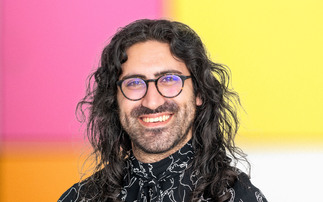
Guy Boden, global head of equities, S&P Fund Services
Categories: Investment
Topics: | Fund performance | Invesco perpetual | S&p | Emerging markets | 15th anniversary
COMMENTS
THE BIG QUESTION
DIGITAL EDITION
@INVESTMENTWEEK