NEWS - US
I confess I am a Berkshire Hathaway shareholder and Warren Buffett fan. I have been interested for some time in his philosophy and investment approach and read, earlier in my career, everything I could about him and his mentor, Benjamin Graham.
About five years ago I was informed there was a separate class of Berkshire Hathaway shares which did not require an initial outlay of over $100,000 to purchase, but still gave rights to attend the annual meeting. I have therefore been able to attend the last three annual shareholder meetings held in Omaha, Nebraska.
These meetings - held in early May 2008, 2009 and 2010 - reported on periods encompassing very different economic and market backgrounds, including probably the most severe financial crisis any of us have experienced.
However, while providing interesting perspective on unfolding events, the overriding message from these meetings is that these shorter term events are nothing new and do not deflect from a simple but very effective investment philosophy.
The three meetings therefore have cumulatively added to my understanding of this approach as I set out in the reminder of this article. I also include some of Buffett's and his deputy CEO, Charlie Munger's, thoughts on unfolding events.
As I flew into Omaha for the first time in 2008, my initial impressions were firstly the remoteness of the location from the noise and activity of New York and London, and secondly the apparent wealth of the community as represented by a concentrated cluster of medical research facilities and well funded university facilities.
The latter is a by product of many of Buffett's earlier investors being Omaha locals. Later on I was also impressed with the very high quality of the local businesses Berkshire Hathaway owns such as Nebraska Furniture Mart and Borsheim's, a jeweller. These are dominant businesses locally.
In the meeting, against a backdrop of a developing banking crisis caused by speculators seeking high short-term returns through leverage, Buffett talked about what I regard as his best ever investment, See's Candies, a slow growing US regional chocolate maker.
In contrast to the complexity of the financial space, this simply produces and retails chocolate under a good brand in a few US states. However, it manages to generate a return of over 40% on invested capital. It grows slowly, but because it requires so little incremental capital for this growth. It is now generating pre-tax profits of $86m on $42m of capital having cost him $25m to purchase.
The following year we were in the midst of the credit crisis and the meeting discussed integrity. Buffett recalled two events that illustrate his concerns regarding a lack of integrity in the financial services industry.
The first is the apology he made to Congress on behalf of Salomon Brothers when the US Government was attempting to close it down after bond market abuses. He was parachuted in as chief executive. The test he recommended to any employee when contemplating a course of action is how it would be reported by an honest, but reasonably critical journalist the next day. If this is likely to be adverse reputationally for the company, do not do it.
Secondly, he reminded us of the warning he gave in a written submission to Congress, earlier in the decade, about the use of derivatives. To paraphrase him, used sparingly for hedging purposes they are useful, but used intensively as vehicles for speculation, they are weapons of mass destruction. Many of the problems experienced in 2008 would have been avoided by adherence to this advice.
The key investment message at this point was that although regrettable, the fear caused by such events in the securities markets creates incredible opportunity to buy assets - equities and bonds - at way below their actual or intrinsic value. Being in a position to buy and actually making purchases in such times has been an important driver of Buffett's success.
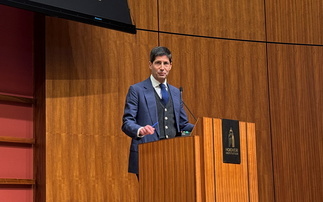
My visit in 2010 was probably the most important to me, but at a less turbulent time generally. This is when it really came home to me how Buffett had taken the teachings of Benjamin Graham on board, but had moved onto a different level. Graham's key message was that the intrinsic value of a company, essentially defined as the discounted value of the cash that can be taken out of a business during its remaining life, is probably a lot less volatile than movements in its market value would suggest.
If an investor makes a reasonable appraisal of a companies intrinsic value, he can move the odds of any investment being successful in his favour by buying stock when the market value is at a significant discount to this valuation.
Graham applied this to any company whether good or bad. Buffett at this meeting was questioned as to why in recent years he had purchased larger, but more capitally intensive, companies such as MidAmerican and Burlington Northern Santa Fe Railway.
His answer was due to the size of Berkshire Hathaway, he had to compromise on the return on capital a potential target company generated in order to ensure it had the scale to make a difference.
However, he emphasised the requirement that acquired companies should both be valued below intrinsic value and make returns on capital above the cost of capital. This requires durable competitive advantage. This high return characteristic, allied with growth, is incredibly rewarding over time due to the powerful dynamic of compounding.
Therefore, at a time rich in opportunity to buy companies at attractive prices, Buffett retained this quality overlay with the attendant trade off of missing out on shorter term gains from weaker companies rising from very depressed valuations for longer term value from cash rich high quality companies. The latter will almost certainly generate greater value over time.
I intend to attend meetings annually in the future both in my capacity as a shareholder and therefore investment partner of Buffett, and also to further increase my understanding of the investment philosophy of this truly remarkable investor.
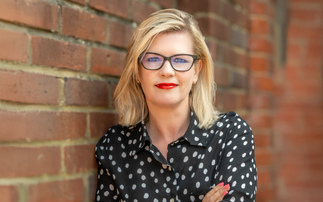
Michael Crawford is a senior equity fund manager at LV= Asset Management and manages the LV= UK Growth fund.
Categories: US
Topics: Lv= | Warren buffett
COMMENTS
THE BIG QUESTION
DIGITAL EDITION
@INVESTMENTWEEK