News - Equities
By Crispin Cripwell is head of US equities at Rothschild Asset Management First-quarter real GDP...
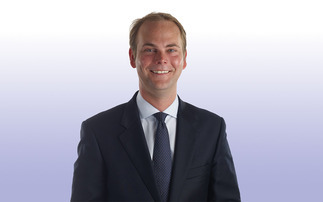
By Crispin Cripwell is head of US equities at Rothschild Asset Management
First-quarter real GDP growth was reported today at 5.8% and vindicates what lead economic indicators were telling us last October.
Slower inventory depletion, together with a pick-up in final demand, has led to a sharp bounce back from last year's light recession. For the time being, this looks set to continue, as shown by the rise in the ISM New Orders index. One of the best lead economic indicators, the ISM New Orders survey (previously the NAPM), reached 65.3 in March, three points above previous cyclical peaks in 1997 and 1999. Consumer confidence, as measured by the Conference Board, has jumped from 85 last October to 110 in March.
Where I differ from consensus is in the view that GDP growth will accelerate to 3.5% during 2003 from 2.3% this year. Is final demand really likely to bounce back as strongly as this, given the very shallow recession seen last year?
The consumer never stopped spending on cars, houses and fridges. and technology is still suffering a hangover from the largest capital-spending boom since World War II. Why should we expect a sharp rebound? Only in areas excluded from the late nineties' spending frenzy ' papers, chemicals, metals and certain industrials ' is demand likely to significantly exceed supply.
As for interest rates, the fears of 125bp of rate rises by year-end have subsided recently to a more realistic 50bp. This is largely due to fewer inflationary pressures. In spite of last year's monetary and fiscal stimulus, I expect inflation to fall further. It tends to slow during recoveries as wages are frozen. It also tends to lag GDP growth and oil prices by 12 months, both of which fell sharply during 2001.
One area of concern is the US dollar. With the strong economic forecasts above, one might imagine that the trade-weighted dollar can continue its long upward march. In fact some would argue that it is because of the strong dollar that imbalances, such as the 4.1% current account deficit, exist.
Yet debt levels have reached unsustainable levels in the US. Total debt to GDP rose to some $30trillion by the end of 2000, according to the Federal Reserve's Bureau of Economic Analysis. Since then it has continued to rise, propelled in no small way by the government-backed mortgage agencies Fannie Mae and Freddie Mac.
Unlike the Japanese, US citizens have little to fall back on in the way of savings when this bubble eventually bursts.
For all the better recent economic news, the US equity market is finding progress heavy-going. The bounce-back from the World Trade Center terrorist attacks was impressive, but it has struggled since then, with volumes light and the S&P 500 back below its 200-day moving-average.
More optimistic is the performance of small and mid-cap stocks. We have re-oriented our portfolios towards these companies, We are, however, riding the cyclical wave, with overweight positions in basic materials and selected industrials. As far as debt is concerned, we are taking a conservative stance, avoiding companies with excessive gearing.
Economic recovery in full swing.
Consumer remains robust.
Interest rates may not rise as quickly expected
Trade-weighted dollar a potential Achilles Heel.
Valuations remain stretched.
Volumes and technicals look poor
Categories: Equities | Investment
Topics:
Comments
The big question
Updating your subscription status
IW Fund Centre
Run in conjunction with Funds Library, the IW Fund Centre combines qualitative and quantitative data on a huge range of funds.
Have your say
This week: What will happen to the eurozone if Greece leaves?
Job of the week
Events
12 Jun 2012 - 12 Jun 2012
The Cumberland Great Cumberland Place, London W1H 7DL
05 Jul 2012 - 05 Jul 2012
Royal Albert Hall, London Kensington Gore London, Greater London SW7 2AP