Go to Investment Week homepage
  • Site search
  • Job search
  • Subscribe
  • Newsletter
  • Mobile
  • RSS
  • Home
  • News
  • Opinion
  • Fund Manager Views
  • Interviews
  • Sector Analysis
  • Features
  • Events
  • Audio/Video
  • Jobs
  • Research Centre
  • Share Centre
  • About us
  • Contact us
  • Advertise
  • UK
  • Global
  • Fixed Income
  • Managed
  • Specialist
  • Markets
  • Goslings Grouse
  • Contrarian Investor
  • Leader
  • The Alchemist
  • The Big Interview
  • Fund Manager Focus
  • Funds to watch (RADAR)
  • Practical
  • Technical
  • The Big Question
  • Conjecture
Where am I? breadcrumbs arrow image Home breadcrumbs arrow image  Interview breadcrumbs arrow image Investment breadcrumbs arrow image Investment Trusts

INTERVIEW - INVESTMENT TRUSTS

The Big Interview: Ian Sayers

15 Mar 2010 | 08:00
Lorraine Cushnie

Categories: Investment Trusts

Topics: | Anthony bolton | Aic | Rdr | Aifm | The big interview

sayers-ian
  • Tweet

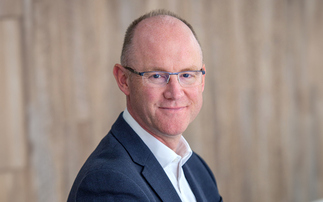
AIC director general Ian Sayers discusses how the investment trust industry has coped with the financial crisis and regulatory pressures

The normally sleepy world of investment trusts has seen a surge of interest of late as it first saw off European legislation, which would have left it dying on the vine, and then received a boost of publicity as fund management guru Anthony Bolton announced he would use the vehicle for his Chinese adventure. Along the way, the industry has had to deal with the financial crisis and the potential implications of RDR. Ian Sayers, director general of the Association of Investment Companies, gives his views on how the industry is coping and where he thinks it is headed.

How do you think investment companies coped with the financial crisis?
Overall, I would say the sector has survived reasonably well. In terms of the number of actual companies that have disappeared, it is less than I would have expected.

This is partly because managers and boards have been more proactive in tackling things head on. If you let things run, discounts widen and the danger is you get picked out and disappear altogether.

Quite a few funds are taking positive action to return money to shareholders, or tackle discounts and have the continuation vote to see if people really want them to carry on.

Obviously, some sectors like private equity have had particular problems, which have been well documented. But overall, I have been surprised at how resilient the industry has been. And we are now beginning to see some interest in new fund launches with Anthony Bolton getting a lot of the headlines, unsurprisingly. But there are also a few other people looking, so I think this year we would expect to see a fair few launches, which is important for a healthy vibrant industry.

What do you think the impact of the Bolton effect will be?
People have said to me this could lead to the investment trust industry being revitalised. I think back in 2007 and 2008 there was not a single launch; now we are seeing multiple launches this year. What I like is the companies are giving shareholders a choice because the more vehicles competing, the better and cheaper they will be.

I think the Bolton launch has certainly caught the imagination of the sector and it is nice this is a structure which still has its attractions.

What do you think about concerns over the Bolton vehicle?
I think in the early days and people were asking if a close-ended fund was the best structure and were concerned about liquidity.

However, I think if you are raising £700m, liquidity takes care of itself. Certainly for the retail sector, if you are buying £10,000, you are not going to have problems with liquidity in a £700m fund. We wait and see.

What do you think about the increased regulation of financial services?
The next few years, certainly the next five years will be a period of increased amount of regulatory attention.

From the UK, European and global level, the world has changed dramatically in the past 18 months following the financial crisis. And whatever your views about who is responsible, it has given people a chance to say these are problems which need to be sorted.

Progressively, there will be more and more regulation and I think our job is to make sure we get regulation where the consumer gets more benefits from it than costs.

We are used to the fact of increased costs with new regulation and this is fine, but if we are going to pay extra costs we want to make sure we are getting something which is working and has not just been introduced for political reasons.

What do you see as the main challenges for the AIC over the next few years?
The main one for the next six months is the AIFM – that is an immediate priority. There are other things on our agenda, but this one dominates the landscape.

A lot of the elements in the directive are things we already have to comply with under UK regulation. But there were an awful lot of things in the first draft to which we strongly objected. Our job has been about trying to get this into a more proportionate shape.

The good news is for those issues, which raised specific issues for our sector, we have achieved pretty much what we wanted.

There were three issues which were really important to us.

Firstly, making sure the company and board would be responsible for this directive rather than the fund manger. The directive’s initial idea was there would be an external fund manger who would be responsible for everything, but that is not the case with investment trusts. This was a fundamental issue for us.

It would have been very odd to have all this other regulation apply to the company and then the manager suddenly gets held responsible for things he was not even doing.

The second one was this idea of the all-responsible fund manager. One consequence would have been only the fund manager could issue shares. But for investment trusts, it is the companies that issue shares, and if it had gone ahead it would have meant we would have been unable to issue any shares.

The third was this rather odd idea of having to have a redemption policy. However, we trade our shares on the stock exchange. We are close-ended because we want to be able to invest in asset classes where you are not necessarily able to sell them to give money back to shareholders.

Are there any areas of the AIFM you are still unhappy with?
The one area we are still looking at, which is going to be more tricky, is this idea of a depositary or independent custodian. We do not think there should be a single depositary, investment trusts should be able to farm out the services to different providers. However, I do not think we are going to win that one.

And there are a number of questions. Firstly, who will be willing to go into that market, and how much will they charge. Conservative estimates are there will probably be a significant charge. It could be a material cost. We have to wait and see, but I think we have to recognise there maybe a price to pay for the additional regulatory benefit.

The directive is probably not something we will welcome with open arms, but compared to where we were in April of last year there has been a huge improvement.

One of the things I have been asked is if was there was too much hyperbole at the time, and I would say yes and no. Yes, if you assumed the directive would change, but the commission was saying none of the provisions was ever going to change and that would have been very bad for the industry indeed.

I do not think we would have disappeared overnight, but I think we would have withered on the vine.

What are the other regulatory challenges?
The other big issue for the UK membership is reforming the tax laws, which regulate their tax-free status, which we call Section 842.

It has been around since 1965, largely unchanged. It has worked pretty well. In fact, it has worked very well, but we do think it is a bit out of date now.

To give you an example, it says the majority of your income has to come from shares and securities. So, assets like property will not give you the right sort of income.

The question is: is there any reason a close-ended fund should not invest in property or interest-baring securities? The answer is not really. It is now beginning to creak with age. We would also like to get rid of the annual approval process, which means all trusts have to go to the HMRC for an annual assessment. We would like to go to a self-assessment basis.

How proactive does the AIC need to be in educating the public?
I see us as providing information, fact sheets, getting the data out, making sure we have statistics and making sure methodology is standardised. I see us having a very strong role in this area.

The area we probably will not get involved in under my tenure is any direct marketing. We have done that in the past. Although I think marketing of trusts is very important, I think it should be left to management groups – especially as the membership base is much more diversified than it was ten years ago.

Some are completely owned by institutions; some are completely owned by retail. To try and market them you would need different approaches.

The idea of us raising money from members and spending it just will not work, so it is much better to allow the groups to do it from their own perspective.

So we see ourselves as the first port of call for a retail investor who just wants some information. Not the direct marketing, but the generic information and obviously keeping the message in the press.

Do you think discounts mechanisms have been a success?
When I first joined the AIC we sold the discount as an advantage. And while that is true, I think there is a real problem in terms of our mission because we represent the existing companies and their existing shareholders. If the person buying is not currently a shareholder and is getting the fantastic deal, then the person selling is not getting such a fantastic deal.

I think one of the good things is the sector has become more attuned to wide discounts and discount volatility. The directors do have a duty to look at ways to try to reduce absolute discount. And we see this happening as discounts did not rise up anything like as much as they have done in the past during the financial crisis.

Where we are with discount controls is they are not in their infancy, but maybe they are in their teenage years. People are still wondering what the best approaches are and I think the one thing I believe strongly is you cannot apply one approach.

One of the things that did come out of the crisis is some companies signed up to discount control mechanisms, which were too onerous because they thought they had liquid assets, which turned out to be not liquid enough.

Boards have to think very carefully what is the best approach. Is a continuation vote a good thing? Should you buyback shares regularly? Do regular tenders? All sorts of different things are going on and it is having an impact. As I said, discounts have not widened as much in this crisis as in previous crises.

Do activist funds have a role to play?
You have to recognise they are shareholders in companies and therefore the board has to take their view into account. The board does have a duty under the Companies Act to look longer term and activist shareholders can be more short term in their horizon.

I certainly do not think their presence is all bad. We have had question marks about transparency in some cases, but I do not think they are bad for the sector. Sometimes the change they are agitating for may eventually end up being supported by other shareholders as well.

The one thing we have a concern about is you can sometimes have a problem if you have a rather more retail-orientated trust. Most retail investors do not vote, so if you have someone who has a 5% shareholding and they are the only ones who vote, they have disproportionate influence.

They are there to exploit the discount, but the emphasis is then on the boards to make sure the discounts are tackled.

What do think the impact of RDR will be on investment companies?
I think there has always been an issue with the sector as all the evidence is commission does effect the selling of products and we have advocating scrapping commission altogether.

But there are a whole variety of barriers to advisers recommending trusts and one has been the major platforms do not have investment company shares on them.

Cofunds has announced as of next year they will have trusts on them. It would have happened eventually, but with RDR I think it is inevitable. It will be hard for independent advisers to say of course I consider all these products, but the platform I have only sells unit trusts. Once Cofunds moves, we will see the others come online and that gets one barrier out of the way.

I think it will be good for the sector. We are very cautiously optimistic because the one thing we do not know is how important the independent tag is going to be.

Now my view is we should be moving financial advice to a position in society which is more like an accountant – more of a profession and less of a door-to-door salesman.

That is what you should aspire to because it is so important. Everybody needs advice, but it is so boring to the average punter.

I do not think RDR will be a bad thing for the sector but we are not planning for a flood of IFAs knocking down the door with millions of pounds for investment trusts.

  • Print
  • Share
  • Comment
  • The Big Interview: Ian Sayers

More investment trustsnews

  • Attack of the arbs: The trusts at risk from activists

  • IT dividend rule 'could hit shareholders in the pocket'

  • Train: How I outperformed FTSE All Share during 2011

  • Fees of the future

Email alerts

  • Get similar articles direct to your inbox

Related information

Recommended reading

  • Woodford ditches Tesco as Buffett buys

  • Rogers wary of US equities despite roaring markets

  • Why the eurozone has more than 12 months left

  • Conjecture: High Yield Bonds

  • Barclays shares soar despite profits fall

Categories

  • Investment Trusts

Topics

  • Anthony Bolton

  • AIC

  • RDR

  • Aifm

  • the big interview

Categories: Investment Trusts

Topics: | Anthony bolton | Aic | Rdr | Aifm | The big interview

  • Comment
  • Email to a friend
  • Print

COMMENTS

There are no comments submitted yet. Do you have an interesting opinion? Then be the first to post a comment.Post a comment

MOST COMMENTED ARTICLES

  • Spurs boss Redknapp cleared of tax evasion charges

  • FATCA: US Treasury updates proposals to ease burden

  • Woodford ditches Tesco as Buffett buys

  • Buffett: Bonds should come with a health warning

  • Investors 'twice as likely' to choose active funds over trackers - Lipper

AUDIO/VIDEO

  • Conjecture: High Yield Bonds

  • Conjecture: Global Emerging Markets

  • VIDEO: Why Japan is set for a recovery in 2012

  • Conjecture: Global Equities

  • Conjecture: Fixed Income

THE BIG QUESTION

fragment image

Every week, we ask the experts for their views on the latest topics in the industry

  • View all

EVENTS

  • fund5live

  • Senate Spring Investment Conference

  • Absolute Returns Focus 2012

  • Most read
  • Popular topics
  • Related articles
  • Woodford ditches Tesco as Buffett buys

  • Rogers wary of US equities despite roaring markets

  • Conjecture: High Yield Bonds

  • Could Ireland be this year’s recovery play?

  • Would you invest in Facebook now?

  • Close Brothers
  • IMF
  • Inflation
  • Italy
  • Portugal
  • Schroders
  • Spain
  • US
  • Warren Buffett
  • eu
  • FTSE retreats from six-month high as Greek debt talks stall

  • RBS surges on profit jump as EU talks lift markets

  • US markets surge on eurozone hopes

  • LIVEBLOG: Global markets in turmoil

  • Global markets rally as EU moves closer to Greek bailout

EDITOR'S CHOICE

1 2 3 4

hale-clive

View from the Bridge: Investment biker

Being a long time motorbiker, I am very conscious of the ever present threat that comes from being unaware of what is in front of you.

Jupiter tops Alpha Manager provider list

Jupiter Unit Trust Managers employs the most FE Alpha Managers with 12 on the newly revealed list for 2012.

lawrence-gosling

Gosling's Grouse: Baying for blood

When a phlebotomist sticks a needle in a vein you pay attention. He or she has you just where they want you.

obama-concerned

FDR, Reagan, Clinton or Obama: When were markets strongest?

Three years into Barack Obama's term as US president, how do equity market returns under this administration compare with those seen under previous leaders?

DIGITAL EDITION

fragment image

Investment Week digital edition

Register now to receive Investment Week in your inbox.

@INVESTMENTWEEK

fragment image

Follow IW on Twitter

Sign up to have all Investment Week's news and analysis tweeted straight to your timeline.
  • Home
  • News
  • Opinion
  • Fund Manager Views
  • Interviews
  • Sector Analysis
  • Features
  • Events
  • Audio/Video
  • Jobs
  • Research Centre
  • Share Centre
logo

© Incisive Media Investments Limited 2012, Published by Incisive Financial Publishing Limited, Haymarket House, 28-29 Haymarket, London SW1Y 4RX, are companies registered in England and Wales with company registration numbers 04252091 & 04252093

  • Site search

sponsored by

Site Credentials:

  • Contact us
  • About Incisive Media
  • Privacy policy
  • Terms & Conditions
  • Accessibility
  • Sitemap

Related websites:

  • IFAonline
  • Professional Adviser
  • Mortgage Solutions
  • Retirement Planner
  • ETFM
  • International Investment
  • Professional Pensions
  • Global Pensions

Jobs:

  • Director/Executive jobs
  • Investment Adviser jobs
  • Investment Analyst jobs
  • Portfolio Manager jobs
  • Private Client Stockbroker jobs
  • Wealth Manager jobs

Accreditations:

  • Digital Publisher of the Year 2010
Tweet