INTERVIEW - MANAGED
Categories: Managed
Topics: | Bny mellon | Newton | Chief executive interview
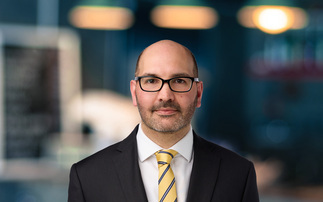
Veritas co-founder and CEO Charles Richardson talks to Caroline Allen about how smaller, tightly-run companies provide better opportunities in testing market conditions
One of the more interesting fallouts from the global financial crisis is the impact it has had on the biggest brand names in the business. Contrary to everything investors were told ahead of the meltdown, it was not the small firms that collapsed first but the industry behemoths, where risk and core values got buried in structures too big and opaque to steer or control.
Charles Richardson, co-founder and CEO of Veritas Asset Management, says the virtues of smaller, tightly-run investment houses have been proven through the most testing conditions in investing memory, and their time has come.
From functional South Bank offices overlooking the London Eye, he talks about the internal and external dynamics of partnerships, and in investment terms, of sticking to regions, assets and themes managers know in order to deliver sustainable performance. The two principles that have underpinned Veritas from its launch seven years ago are a commitment to real returns, and its partnership structure.
Richardson founded The Real Return Group, which acquired Veritas in 2003, alongside his former colleague Stewart Newton, who left Newton Investment Management (now a subsidiary of The Bank of New York Mellon Asset Management), having gradually sold down his stake. For both men, the challenge of building up another asset management firm from scratch held mixed attractions.
“All corporate models have their pros and cons, and each demands certain compromises. We thought long and hard about the philosophy and culture of what we were trying to create,” Richardson explains. “But having worked in big institutions, we knew what we wanted the firm to look like in 20 years. Partnership is the ideal structure for a truly active, independent asset management firm. If you are an active manager you need highly skilled, intellectual people -- you can’t survive without them. A partnership is how you retain and motivate them.”
Veritas is owned by the principals – 19 out of the 36 staff employed in the business have equity. There are six main equity partners. “It is genuinely investment-led, master-of-your-destiny stuff,” says Richardson. “It is why clever people get up in the morning, what keeps them coming to work. They like what they do and they invest alongside the clients, on the same basis.”
With a boutique structure, he adds, the principals need to be absolutely clear what they stand for, because they cannot offer everyone everything. “Firstly, with a partnership you have to make fewer compromises. You are not part of a big machine driven to feed earnings to a parent firm. Secondly, it is unlikely you are distribution-led, launching funds when a theme becomes fashionable. Distribution-led firms have to make hay while the sun shines – they furiously sell the idea of the day, which then just about ticks over until the next one comes along.”
He is critical of that modus operandi, which in the end does the product provider, the investors and the industry a disservice. “It is a structural problem for the industry, and it is exactly how you get sector bubbles. Everyone piles into a fund, but performance soon tails off.”
Expectations on all sides are disappointed.
“Investment banks like to have asset management units because they offer a steady business – an annuity-type income stream, rather than the corporate-finance type models, with far more volatile earnings. So the employers of the asset managers keep pressuring them to produce a consistent flow of earnings.” That leads to short term targets and skewed incentives. Investors, meanwhile, are promised the kind of returns the managers will always struggle to deliver.
In contrast, partnerships “are not slaves to those dynamics”, says Richardson. “The clients do well when you do well – you do well when the clients do well. But what you have to accept is that earnings will be volatile. Consistent earnings do not match a true investment-led culture. It means, for example, you cannot close a fund when you should, and it doesn’t reward existing investors. It is mainly new clients who benefit from that kind of asset-gathering structure and culture.”
That investment-led ethos is central to the composition of the small Veritas team, most of whom go back 15 years or more to Newton Investment management days. “A partnership structure does not suit everyone, and you have to be careful who you take on. In a smaller firm, you have to arrange a lot of the support yourself. You need a degree of self confidence and entrepreneurship, and to enjoy that, rather than think of it as a burden. We prefer people to approach us, because usually it means they have addressed those sorts of issues in their own minds before they get here. It also means we are not overpaying for expertise.”
Does that suggest he thinks many asset managers overpaid? “We have seen established investment houses pay substantial sums for what we consider average fund managers. How? We know the business and can see how average fund managers are supported by infrastructure. The way we are structured here counters that.” However, he admits to hiring “ahead of what you might expect for a boutique” to balance commercial and investment expertise, so the portfolio managers can concentrate on what they do best. “A well resourced commercial team should give confidence that the business is robust and has a solid base from which to grow.”
Any expansion is knitted into a commitment to real returns. In fact, the early group name was Real Returns, a phrase, says Richardson, not commonly used at the time. “In the previous decade, there was clearly too much of a focus on relative returns, either against a benchmark or against a peer group. We wanted to create a firm which held to the notion that clients wanted real money back after tax, after inflation, after fees etc.”
From the professional and personal backgrounds of the founders emerged three key focus points: Global investing specialist expertise in Asia, and a UK and offshore private client business. The three prongs provide breadth and depth, and a degree of protection for the business. Early clients were private clients or institutions with a global mindset, even if based in the UK. More recently with size, awareness and track record, the firm is attracting greater interest from a wider spectrum of clients.
Veritas now has some £2.6bn assets under management. £1bn of that is in its Asian Strategies, run by Ezra Sun, and £1bn is in Global strategies, run by Andy Headley and Charles Richardson. The remaining £600m is the private client business, led by Anthony Rosenfelder and Stewart Newton.
The £350m Global Equity Income fund, co-managed by Richardson and Andy Headley, was self-seeded by the managers, and is still delivering strong performance (60.62% to end December 2009, since inception). As it approaches its fifth anniversary, its broad strategy has been vindicated.
“The outlook here is global, we have all seen the potential over many years,” explains Richardson. “With a regional focus, you immediately narrow the opportunity set, and also lose the diversification.”
He notes how regional income funds failed to pay dividends as the financial crisis took hold. And dividends, according to Veritas criteria, unlike earnings, are honest, if they are payable and sustainable. A brochure for the Global Equity Income funds quotes John Burr Williams, an early value investor, in his 1938 book The Theory of Investment Value: “A Cow for her milk, A Hen for her eggs, And a stock, by heck, for her dividends.” The poetry, says Richardson, was awful, but his investment thinking was leading edge. Dividends are a critical part of creating long term wealth.
The Global equity funds are orientated towards mid to large cap stocks. The firm follows John Templeton’s maxim of geographical diversification, which also helps protect high conviction portfolios which may hold just 30 stocks. Would he consider himself a contrarian investor? “The virtues of being contrarian are often claimed these days. Perhaps we are, sometimes. We prefer to say you should think contrarian, but you do not always have to be a contrarian.”
Veritas’ Asia expertise includes Japan, and a dedicated China fund. The investment strategy is led by Sun in London, with a team in Hong Kong under Raymond Foo, formerly well known as a star manager at Brevan Howard.
Veritas has just won a large mandate from an Australian superannuation fund. “There are plenty of good managers in Australia but they were looking for the global approach that we could offer from here in London,” says Richardson.
He agrees with strategists identifying a shift from West to East of economic and financial influence but adds: “Asia has seen extraordinary economic growth, and increased productivity. But that has to be navigated. Economic growth doesn’t automatically mean returns for equity investors.”
The third part of Veritas’ business is its Private Client division set up 17 years ago by Anthony Rosenfelder. The business is split into UK and offshore private clients. The firm recently appointed Mark Rayward from Newton as the head of its UK business. The managers have long-standing links to the sector but Richardson identifies a new dynamic, energising clients’ investment approach.
“The first thing is that the key principals more than ever tend to have global interests, so they like our approach. The second thing is that there is no template. Each portfolio is built specifically for the client.”
He also notes the bar has been raised for client service. “The pressure is on. Frankly it is time to look at the professionalism of this area. In the UK too many private client businesses have got away with being second rate. These days whether it is institutional, retail or high net worth business, the same standards apply. Clients want to deal with quality fund managers. They will not accept second rate investment returns for supposedly first rate service. And they are no longer prepared to take assurances on trust. They are taking a much tougher line.”
With expertise in three fast-growing sectors Richardson believes Veritas could build total assets under management to £10bn but declines to put a time frame on the target. “We have the capacity – we structured the firm with that in mind. Some models are very scaleable, but capacity depends a little on your methodology. We estimate we could double the private client, trusts and charity business in five years.”
However, for him, the focus on the AUM number misses the point.
“We absolutely do not want a scale business, we are far more interested in progressive growth. This type of investing is not a production line you can just speed up, and expect the same result. And it is not a lifestyle model either. We are on a path of progressive, managed growth, but £10bn is a manageable target.”
Is there a critical mass that an investment business must reach in order to be sustainable?
“The short answer is Yes, and after five or six years we are very glad to be through that mark.
But when people talk about critical mass what they really mean is the resilience of a business, rather than its capacity, although perhaps the two are related.”
“What we have done is to build out a commercial team slightly ahead of where the business is – that is perhaps an art form. But you need to be able to respond when business comes in or risk disappointing expectations, which is far more damaging long term.”
Categories: Managed
Topics: | Bny mellon | Newton | Chief executive interview
COMMENTS
THE BIG QUESTION
DIGITAL EDITION
@INVESTMENTWEEK