FEATURE - EUROPE
Categories: Europe
Topics: Ignis | Fund manager focus | Europe
Ignis manager steers £300m boutique fund to third in Europe sector over five years
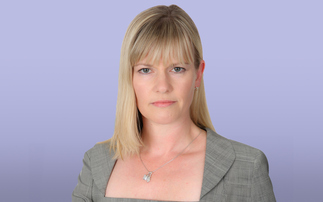
Barry Norris, co-founder of Ignis joint venture boutique Argonaut, has steered the £300m Ignis Argonaut European Alpha fund to top-quartile performance since its launch in May 2005.
The fund is ranked third out of 79 vehicles in the IMA Europe excluding UK sector over five years to 14 June, up 71.1% compared to a sector average increase of 34.1%. Over one year, the fund is ranked 10th out of 109 vehicles, up 22.8% compared to an average rise of 14.6%.
Norris also manages the Ignis Argonaut European Absolute Return fund. Launched in February 2009, the £13m vehicle is up 8.6% over one year compared to an average peer group increase of 7.7%. It sits in the IMA Absolute Return sector,
How would you describe your investment process?
I would describe it as three dimensional. The first key element is traditional stockpicking using bottom-up analysis to find companies with attractive attributes which we think are undervalued by the market. I am not a buy and hold investor. I do not buy companies that are simply good companies if they are also expensive. What I do is buy assets which are undervalued and sell them when they are efficiently valued.
The second element is to identify key macro themes which are likely to be a catalyst for the performance of individual stocks in the portfolio. So from 2003 to 2008, for example, those themes were emerging market growth, scarcity of commodities, a strong euro, and growth in peripheral economies of Europe. Now those macro themes are very different. Last year we were quite vocal about saying the euro was significantly overvalued when it was $1.50 against the dollar. We expected the euro to fall, therefore the theme of a weak euro and a strong dollar became a significant catalyst from a macro perspective for stocks we liked from the bottom up to start performing. We very much tilted the portfolio towards those macro themes.
The third element is portfolio diversification. It is very important to see how each stock fits in to the portfolio. What I mean by this is the key element of managing risk, which is to have a portfolio with a 90% probability of winning rather than a 50% coin flip probability. What we are trying to do is avoid binary bets, which simply rely on the market going up or down. We want to give ourselves the best possible opportunity to outperform, whatever the ebb and flow of the market conditions.
What are the reasons for the European Alpha fund’s strong performance over the last year?
Last year there were a lot of doom and gloom merchants who had got themselves to the stage where they thought the only outcome must be a very negative one, and therefore any risk in the equity markets should be avoided. We were much more intellectually agile in understanding that there was a very strong recovery underway. We believed that this recovery would feed through into corporate profit, resulting in a very strong market last year.
I think more recently we have been able to move on from this, realising the initial recovery trade was over and that actually what we were into was more of a mid-cycle phase.
Stockpicking would be more important, where macro themes had changed from simply high beta or low beta to currency and country selection. I think this has been very important this year.
This year we have been running a portfolio with a neutral beta. We have actually achieved our outperformance year to date with very low tracking error, which has been a pleasing element as well.
How will the funds develop in the next year?
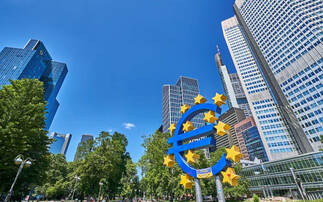
I think more of the same. We are still going to probably be in a volatile market where people worry about sovereign debt, and the implications of this for growth. But we certainly think the likelihood of a severe negative event such as a sovereign default in Europe has been overplayed. There has been too much sensationalist reporting of problems within the eurozone.
There have been a lot of opinions expressed with very little analysis, as far as we can see. We think there is a logical plan within the eurozone to avoid this very negative event of a sovereign default. It does not mean it is all going to be plain sailing and that people will not worry about it. But I think sovereign default which significantly damages the banking system, and therefore leads to a second double dip, can be avoided. This is as long as the three main protagonists – the governments of peripheral Europe, core Europe and the ECB – all do their bit according to the plan.
I certainly would not rule out a significant second crisis, but at the moment it seems to be a manageable problem. General market views have got so bearish abut it being a probable outcome, and valuations have therefore become very cheap despite there being no slowdown to date in the real economy. In fact, the recent ISO survey findings in Germany were much stronger than expected. Germany, which is 25% of the eurozone economy, is booming at the moment, and yet sentiment towards European equities is as bad as we have ever experienced.
It is worse than it was in the second half of 2008, but things are certainly not that bad.
Do you think investors should still be looking at European funds?
I think the sources of return over the next few years are going to be very different than over the last ten years. Over the last ten years, currency has been a major factor in returns, particularly for UK investors. I am not necessarily sure this is going to be important in future, but we do see faster economic growth within the eurozone, and we do see a lot of companies for which a strong euro has been a big headwind.
A weaker euro not only improves their competitive position against Asian and US companies who peg their currency to the dollar or use the dollar, but actually all those profits in dollars get translated back into euros at a much more favourable rate. If you think that peak earnings for the European market in 2008, which in aggregate were at a level 60% above what analysts are forecasting this year, it gives you some idea of the potential bounce back in corporate profits.
Those peak earnings were achieved at $1.50 – I am not going to say we will get that peak earning back any time soon. I do not think the banking system is going to get back to peak levels of profitability given the higher taxes banks are going to have to pay, and the greater regulation. But there are a lot of companies within the European stock market which have been under-earning because of the strong euro, and those, we think, will be the winners of the current stock market cycle.
Categories: Europe
Topics: Ignis | Fund manager focus | Europe
COMMENTS
THE BIG QUESTION
DIGITAL EDITION
@INVESTMENTWEEK