FEATURE - EMERGING MARKETS
Categories: Emerging Markets
Topics: Gartmore | China | Fund manager focus
Gartmore China Opportunities manager uses growth-driven process to look for changes within industry overrun by market pessimism.
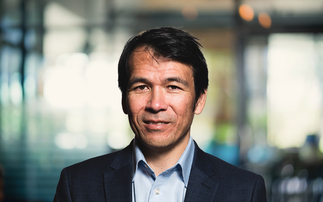
Charlie Awdry believes profiting from unexpected earnings growth explains why the Gartmore China Opportunies fund has generated such strong returns since he took over as manager in June 2006.
Launched in March 1983, the £736m vehicle is ranked second out of 61 funds in the IMA Asia Pacific excluding Japan sector over five years to 7 June, up 174.9%, compared to an average sector increase of 108.5%, according to Morningstar.
Over three years it is ranked 14th out of 74 funds, up 37.2% compared to a sector increase of 24.1%. Over one year the fund is up 30.7%.
The fund aims to generate long-term returns in excess of those typically achieved from investments in Hong Kong and Chinese equity markets.
What is the investment process?
We look for unexpected earnings growth, so essentially we are trying to buy shares in companies where the market is too pessimistic about the future profitability and cashflows of the company. It is a growth-driven process, looking for companies who can outperform expectations.
This process starts with analysing industries – looking to see where there is a change in an industry, which gives opportunities for revenue or margin improvement. We then drill down to find the individual companies we think are best positioned with their franchise to pick up on those trends.
What factors have driven performance over the last year?
China’s economy has recovered. There has been growth acceleration, and of course we had the benefits of quantitative easing coming through and we have seen strong lending from the Chinese banks. Over a 12-month period, we went from a time when people were extremely pessimistic to seeing some growth, which helped fund performance.
Were there any particularly strong stocks?
There was quite a broad range. In terms of pure cyclicals, which have done well for us over the last 12 months, there are a couple in particular. One is Weichai Power, which makes diesel engines. It does very well when there is a lot of industrial activity in China and people are buying trucks.
We have also benefitted from the pick-up in domestic travel and consolidating in the airline sector by owning China Eastern Airlines.
The fund was boosted by owning some smaller-cap stocks that were very oversold and cheap. One of these was Haitian, a plastic injection moulding manufacturer. We have also had some good performance from gas-related companies, including Kunlun. In addition, we have had some decent performers in the consumer IT-related space including Digital China, a distributor of technology goods in China.
What changes have you made to holdings in recent months?
In 2010 we have been moving the portfolio towards bigger-cap companies – this has given us some benefit in the wobblier market, which we have seen year to date.
Last year was the year of small caps in China, when they outperformed quite dramatically. We exploited this, but if you look at the risk/return in the market at the moment and the pessimism versus optimism levels, there is a quite clear preference to be in bigger-cap companies.
So we are looking at pulling the portfolio towards that end of the market – companies such as Sinopec, which is a large state-owned refiner. This stock is trading on 6.6 times 2011 earnings, so we think this is pretty good value. It is a company people are not that excited about but I think its outlook for profitability is probably better than people expect, and it is pretty cheap.
Any other strong themes?
We are fairly consistently overweight domestic China in terms of consumption – we have some export plays in there. At the moment, given the overall level of pessimism in the market, this means valuations are pretty cheap so we think there are a lot of risks but you are being amply compensated for this with cheap valuations. We are also playing tech-related expenditure through consumer services. Our stocks include the Chinese search engine firm Baidu and online travel reservation company Ctrip.
Should investors still be looking at Asia ex Japan funds and China funds in particular?
One of the interesting things about this financial crisis compared to other financial crises is the epicentre of it is the Western world and the developed world. Normally, in past financial crises, you have had the West being forced to give capital or being the financially strong area and the developing world being the financially weak. This time around, what you have got is actually the developing world in a relatively robust place both in terms of financial structure and resources.
There are some global growth issues but I think emerging economies and Asian economies are at least in a better position than they have been in the past. The consumer in China, for instance, is not a particularly leveraged consumer. There are some credit cards and there are mortgages, but in terms of net balance sheets, they are in a far more robust position than, for example, consumers in the UK. The same is true in countries like India and Indonesia as well.
How will the fund develop in future?
We are hopeful. What we do essentially is try and buy companies with good valuations, and I think there are plenty of those. Clearly, there are some fairly big black global economic clouds at the moment and a lot of uncertainty. But there are plenty of opportunities to buy decent companies at good prices, which is a nice backdrop to have.
Categories: Emerging Markets
Topics: Gartmore | China | Fund manager focus
COMMENTS
THE BIG QUESTION
DIGITAL EDITION
@INVESTMENTWEEK