FEATURE - ABSOLUTE RETURNS
Why are investment managers moving away from benchmark investing? It is increasingly unnecessary in a world of absolute returns, writes Legg Mason's Christopher Zuehlsdorff.
If proof was ever needed, 2009 showed why managers should abandon benchmarked returns once and for all. True, after a tumultuous start to the year, investors could breathe a collective sigh of relief as bond and equity markets rallied strongly following their March low point. But how many traditional long only, active equity managers, replicated – let alone beat – their benchmarks? The answer, I suspect, is fewer than one might expect. The dramatic rally in low quality stocks put paid to that. And, while some long only managers undoubtedly enjoyed significant returns in 2009, few could boast strong absolute returns during both 2008 and 2009.
Against this backdrop, absolute returns – i.e. the ability to deliver long-term positive returns across all market conditions – have become the Holy Grail for some investors. Having experienced the seismic upheavals in bond and equity markets over the last few years, it is little wonder investors are now looking for absolute returns on the cash they invest. Indeed, investors’ demands have changed, with far greater interest in risk-adjusted, rather than the old fashioned benchmarked, returns. This interest has partially been fuelled by an alternatives sector that has broadened the opportunity set for investors. It has also been helped by the greater accessibility to such investments, through the dramatic growth in Ucits wrapped products.
The growth of Ucits absolute return funds has been carving out a new European investment landscape. It has narrowed the gap between the alternative and traditional sectors, and is evidence of the increased acceptance of absolute return funds as a sector in its own right. This growth looks set to continue, although it is worth adding a health warning that not every alternative investment strategy is suitable for the Ucits wrapper. Interest in this space is not just from the more traditional alternative investors, such as institutional and high net worth, but also from disillusioned retail investors. In terms of regional appeal, Ucits has a wider appeal than just within Europe, increasingly gaining popularity in both Latin America and Asia.
With this interest in absolute return funds, what sort of strategies should an investor be looking for? Looking back over the past two years – and here it is important to focus beyond the last year – the managers that coped best with the financial storm were those who have been unfettered by restrictive mandates. Such managers had the freedom and flexibility to adapt to prevailing market conditions. In short, given how fast the world was changing, the strategies that worked best were those that could adapt quickly to the ever-changing environment. These were the macro managers.
Macro managers and strategies continue to make sense in the current environment. To be clear, global macro managers take a top down view of global markets and look to exploit trends, inefficiencies and dislocations through equity indices, fixed income investments, currencies and commodities.
So what macro themes are playing out in 2010? In our view the most significant macro development over the past year has been the dramatic shift in savings and spending patterns from developed to developing. This trend is only likely to continue, with the developed markets firmly shackled – for many years to come – to repair private and public sector balance sheets damaged by the financial crisis, a situation that is set to hinder future growth. The developing world on the other hand is focused on developing their domestic markets, increasing consumption and strengthening their economies. This has changed the traditional balance of power and we are seeing the emergence of a new world order, led by Brazil, India and China. This realignment of the ‘new powers’ is opening-up a mass of investment opportunities around the globe.
The commodities market is one such investment case being driven by the emerging markets. Emerging economies’ demand for energy and base metals is only likely to increase, no doubt led by China’s voracious appetite, and with supplies finite, prices are only likely to rise. Gold has had a strong run to date, and has the potential to go even higher, driven by its role as a safe haven currency and ongoing demand from the emerging markets as they seek to shore up their foreign exchange and diversify away from the dollar.
Currencies play an important role in a macro investor’s portfolio and looking at the world today once more, it is the emerging markets that look better relative to the developed world, in particular a number of the Asian currencies. The commodity currencies also look attractive on the back of elevated demand for energy, metals and agricultural commodities. This certainly does not mean the demise of the dollar, for it still has a role to play as the reserve currency, especially if we continue to experience volatile markets, but the pressure is on the euro over ongoing weaknesses in the eurozone.
In the fixed income space, the low interest rate environment looks set to continue for the time-being, with developed market central banks unlikely to increase rates over the short term. Further down the line, the weight of the debt burden – particularly in the US and Europe – is very likely to result in inflation, regardless of the employment situation.
Such an environment creates significant investment opportunities for the macro manager, who will look to benefit from the different rates of recovery, with European growth in particular looking likely to lag.
In our view an absolute return fund following a global macroeconomic strategy looks to be the best method of tapping into these disparate and sometimes contradictory trends.
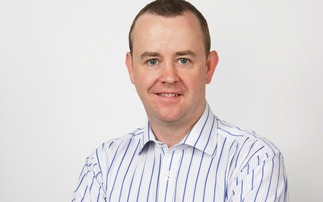
Christopher Zuehlsdorff is co-manager of Legg Mason’s Permal Global Absolute fund
Categories: Absolute Returns
Topics: Legg mason | Bric |
COMMENTS
THE BIG QUESTION
DIGITAL EDITION
@INVESTMENTWEEK
absolute alfa
Real traders are taught that the Holy Grail to Investing doesn't exist. Real people were taught that all the planet's move about the earth, don't go to far out into the ocean(you'll fall off the earth), on and on..........
When one looks outside the box(inventor), goes against the group(thinks for self), said they found(developed) something that is supposed to be impossible(airplanes), they were once killed. Now these people are called bad names and delegated to be unheard, and ignored group.
The ultimate business solution. The ability to cut the cost of any business expense, or just plain invest.
I developed multiple arbitrages that enable me to trade(not invest) in the financial markets, without risk(The Holy Grail to Investing), or arbitrage that anyone can do. Over 30% a year.
Thomas Adair
thomasadair@live.com
Posted by: Thomas Adair
19 Apr 2010 | 15:06
Complain about this comment